
I don't think people are fully conscious of how important sound is to the experience of being in a restaurant. Guests can have a conversation at their table without the thought to raise their voice.”
Steven CookCo-Owner, Zahav
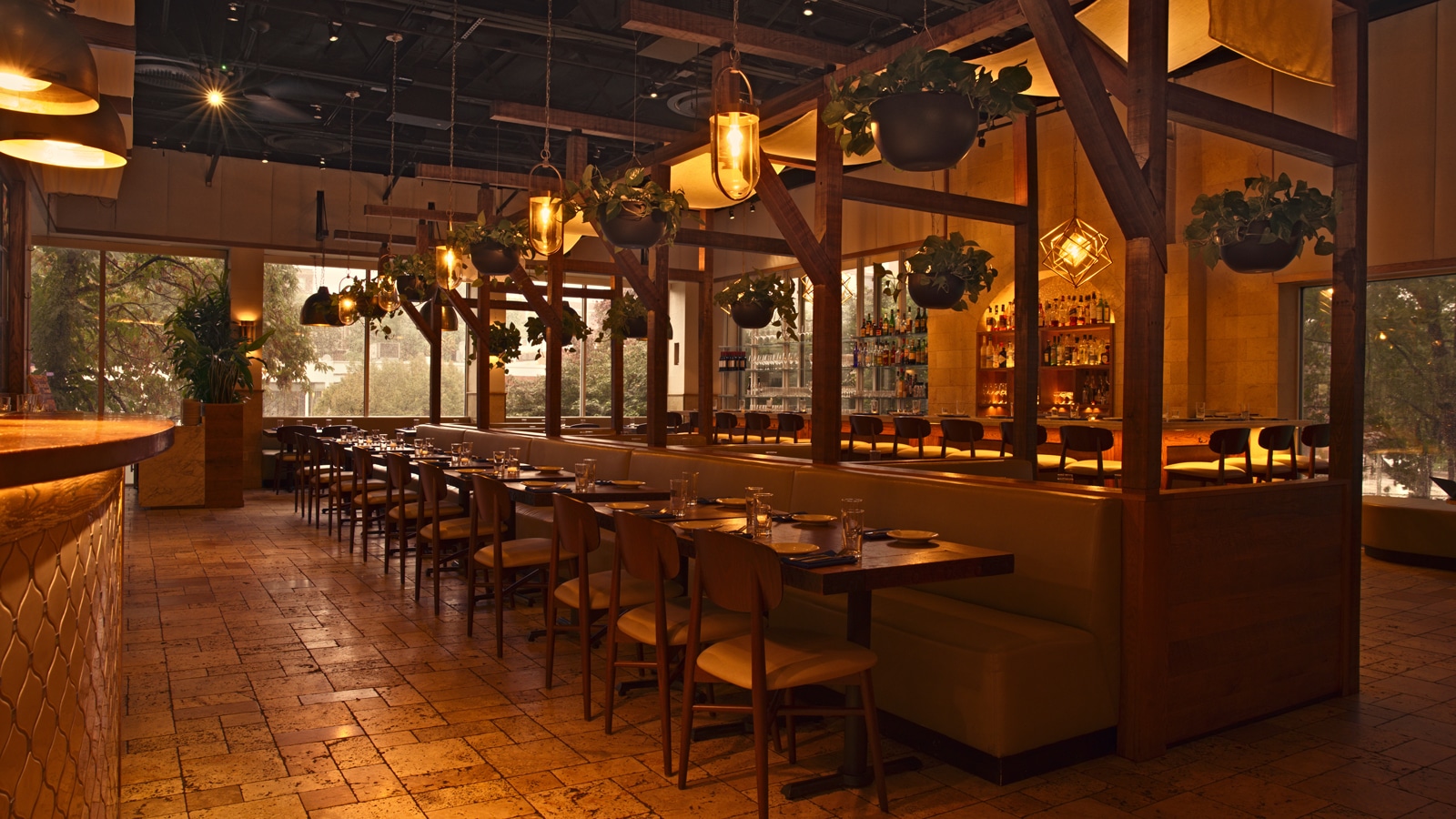
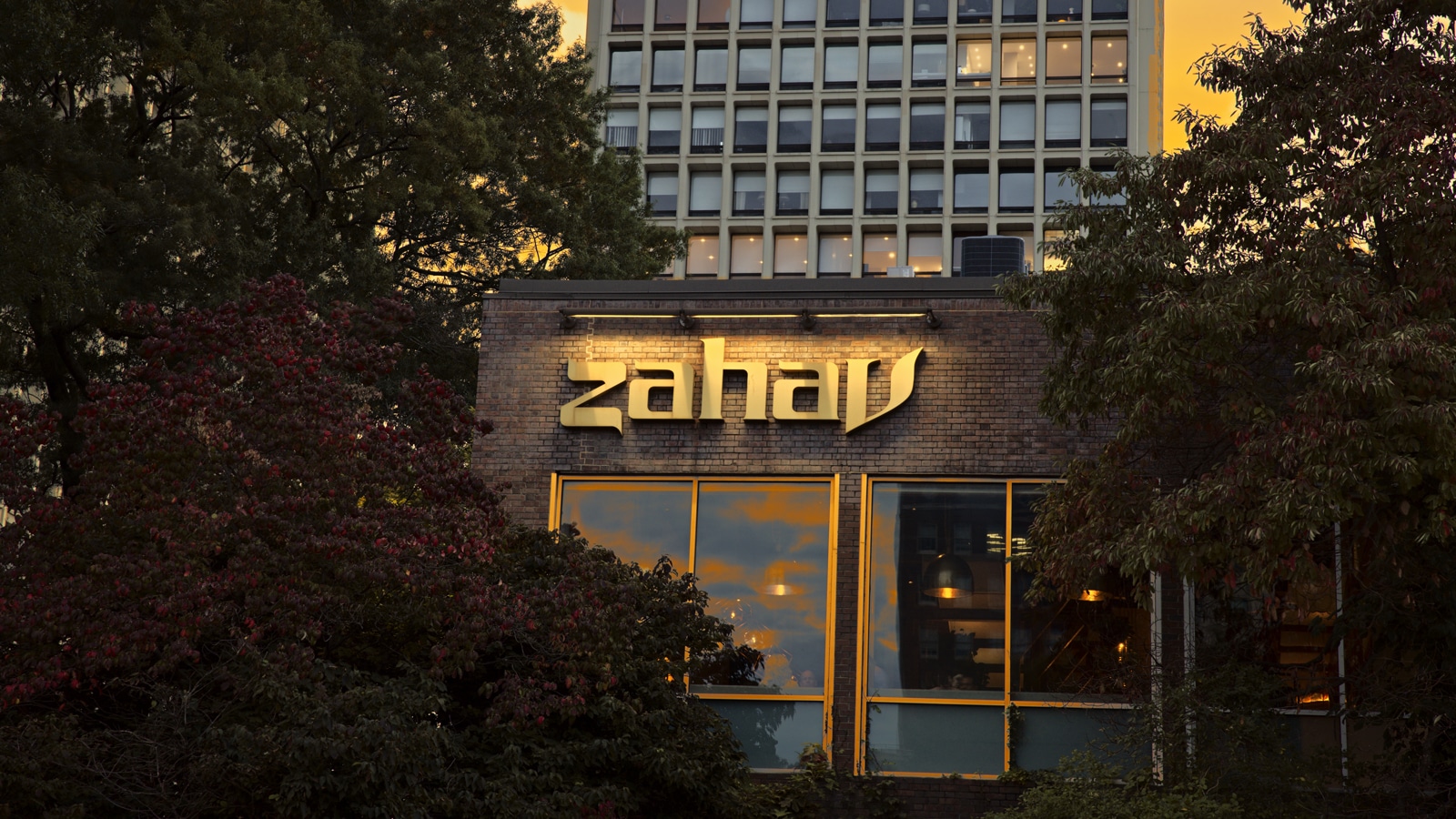
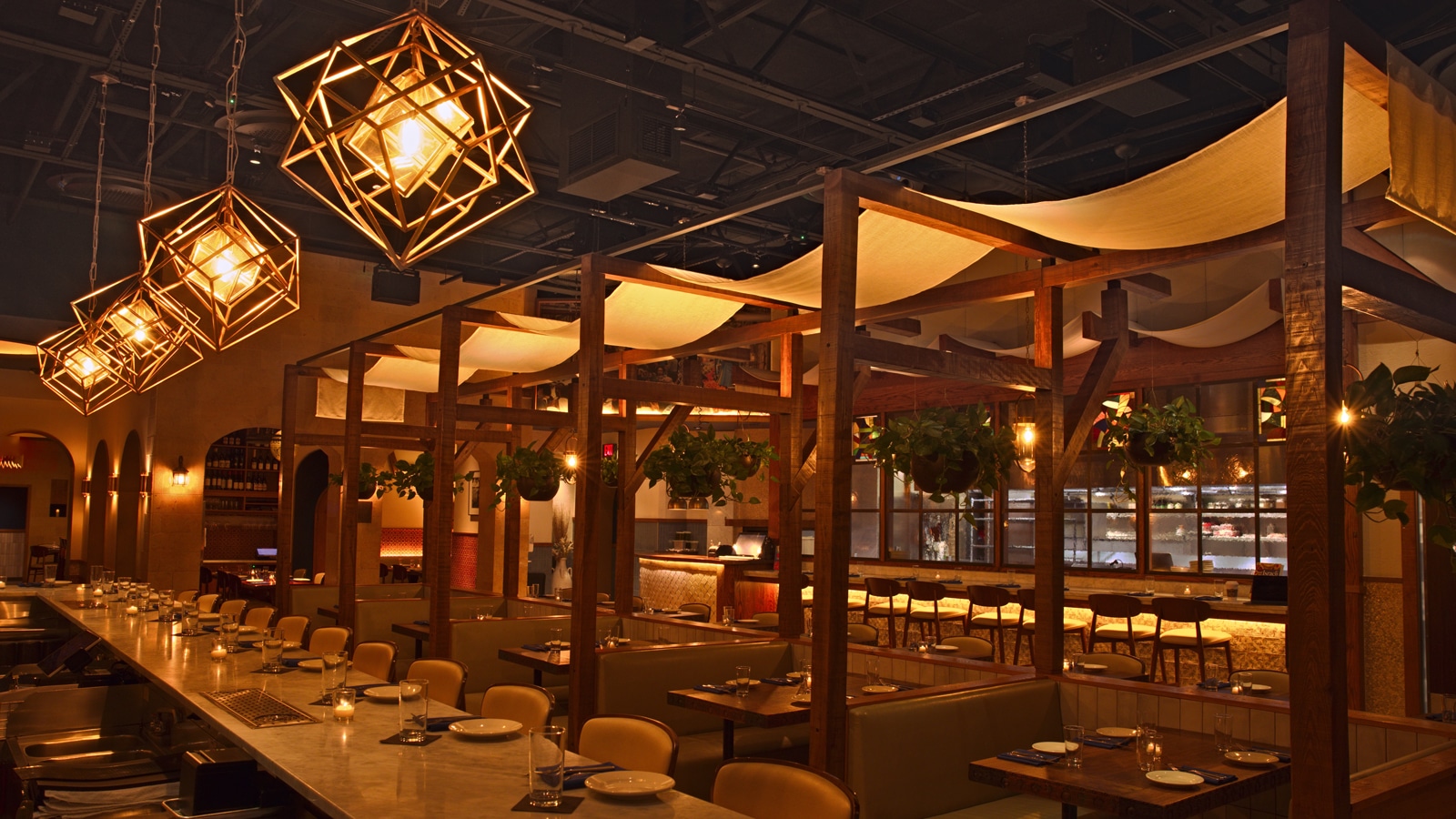
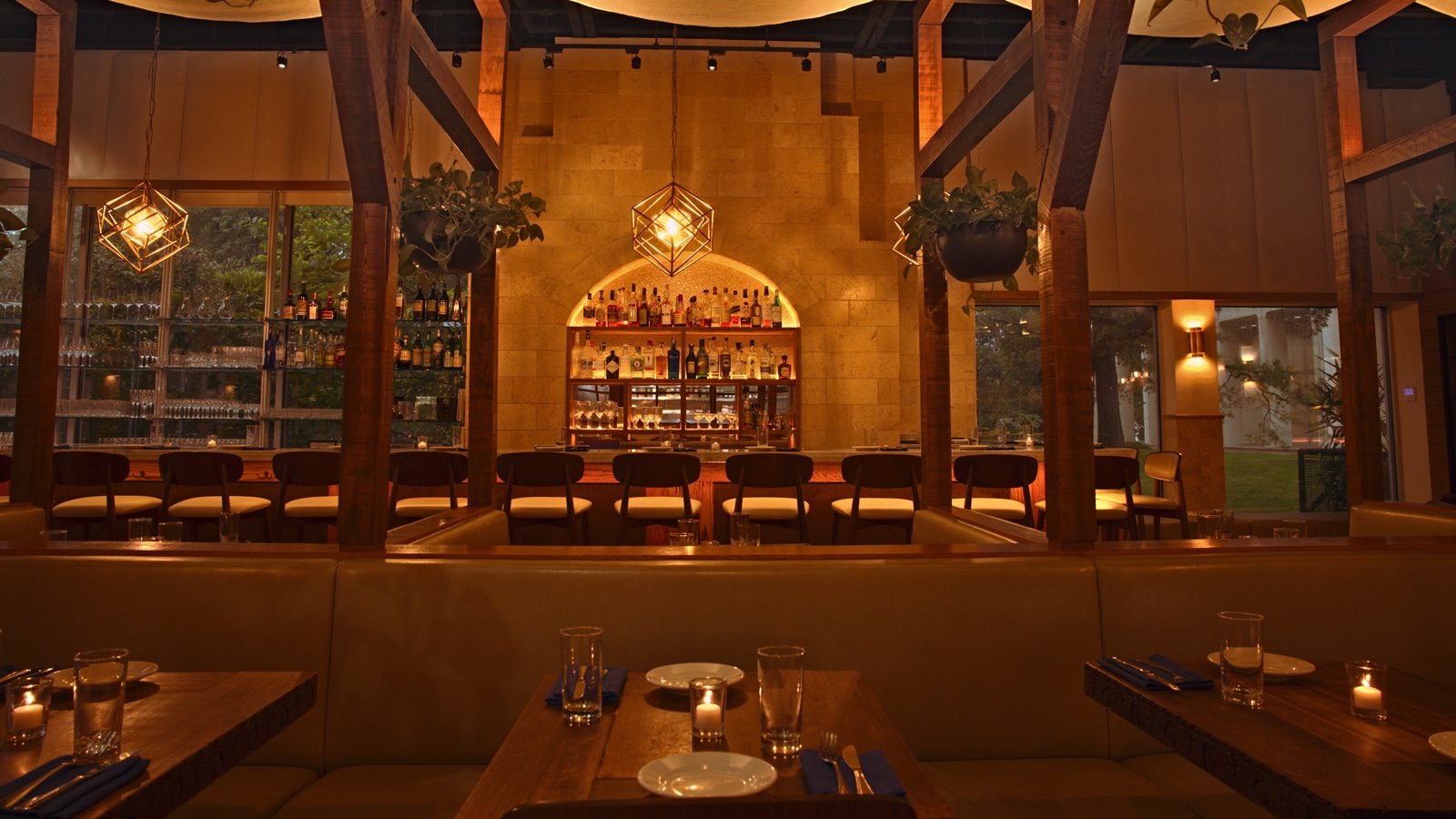
At Philadelphia’s acclaimed Zahav restaurant, chef Michael Solomonov’s eclectic playlists are as carefully curated as the menu. But as the dining room filled each night, music and conversation sometimes competed for attention. A new Meyer Sound Constellation acoustic system, powered by the NADIA digital audio platform, now helps preserve Zahav’s lively atmosphere while making conversation more comfortable.
“We’ve done a half dozen extensive renovations over Zahav’s 18 years, but somehow we still had the original sound system,” says co-owner Steve Cook. “People plan their visits to Zahav far in advance, often for special occasions, so we’re especially conscious of creating a vibe with the same level of care we put into every other part of the experience.”
Guests had sometimes remarked that the music was too loud, so when a friend of Solomonov’s at The Philadelphia Orchestra suggested they meet the Meyer Sound team, they jumped at the opportunity. A visit to the company’s Berkeley headquarters sealed the decision. “We were totally wowed,” Cook says. “We knew we had to figure out how to bring Constellation to Zahav.”
One Dining Room, Four Zones
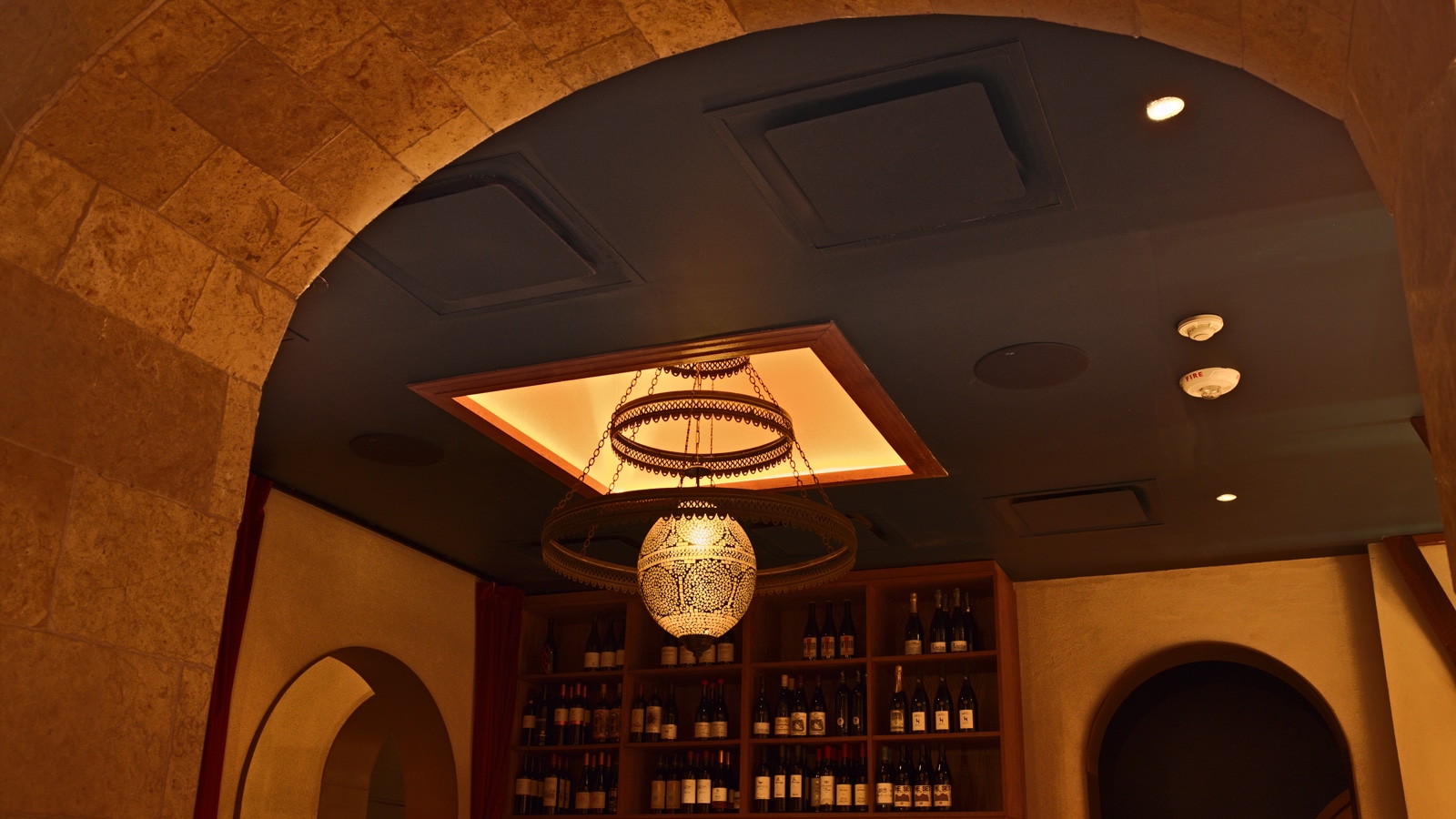
The upgrade combines Constellation and acoustic treatment, including a Meyer Sound Libra acoustic panel. The main dining room system uses 16 microphones, 13 UP‑4slim point source loudspeakers, seven MM‑10XP subwoofers and two USW-112 subwoofers. Elsewhere in two smaller dining areas, two Ashby‑8C ceiling loudspeakers and two UP-4slim loudspeakers support music playback.
NADIA enabled Meyer Sound Constellation Director Pierre Germain to create four acoustic zones within the compact dining room: the bar, two central seating areas, and a kitchen-facing section. Its expanded processing power makes this finer level of acoustic control practical, compared with the one or two zones typically used in earlier Constellation restaurant installations.
Constellation also adapts dynamically to the unpredictable sounds of a busy dining room. “If somebody bursts out laughing at one table, it’s not going to reverberate that much louder at the other end of the room,” says Germain.
Zahav’s system is an example of Constellation Focus, the application within the Constellation Acoustic Suite designed for localized clarity and natural sound masking in spaces like restaurants, boardrooms, and classrooms.
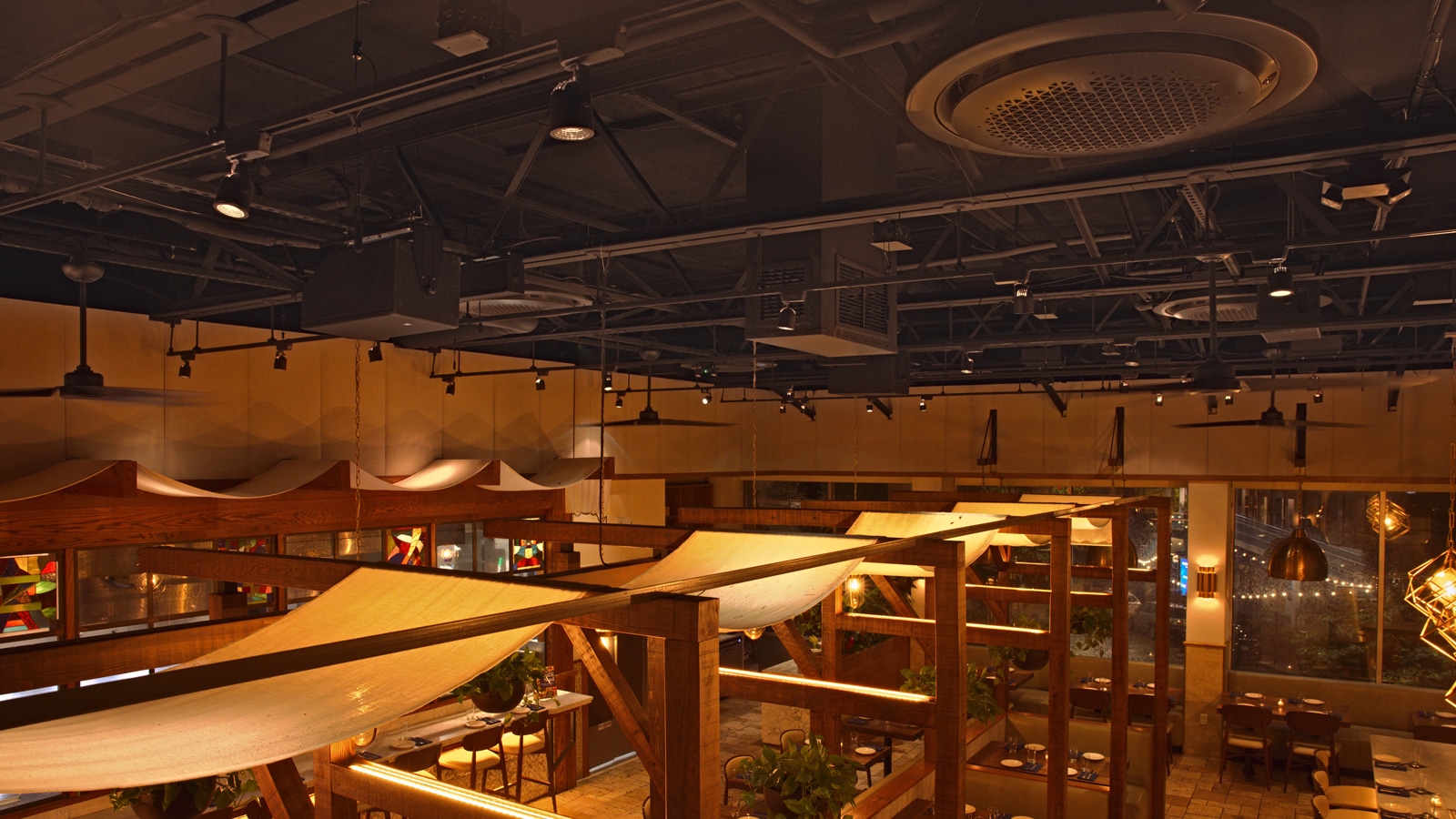
For integrator Washington Professional Systems (WPS), the compact space presented unique challenges. “With a small Constellation system each element, each microphone and speaker becomes even more important,” says Del Jones, CTS, senior project/sales engineer at WPS. The team navigated ceiling fans, HVAC equipment, decorative canopies, and limited ceiling access. “The big difference was trying to do a system in a restaurant that’s still operating,” he adds. All work had to be scheduled around daily dinner service.
An Effortless Part of Service
For general manager Steven Vreeland, the Constellation system also simplifies the nightly routine. “It’s enabled us to set it and forget it. Background music goes on at 4:55 every day,” he says, “and the next time we consciously think about it is when we switch playlists around 8 o’clock.”
“We’ve heard nothing but compliments about the music since Meyer Sound was installed,” Vreeland adds. “The common thread in the feedback is that the music feels more in sync with the atmosphere.”
For Cook, the bigger payoff is how Constellation shapes the dining experience. “I don’t think people are fully conscious of how important sound is to the experience of being in a restaurant,” he says. With the new system, he explains, “guests can have a conversation at their table without the thought to raise their voice.”