
The Montreux Jazz Festival has always believed that the artist experience and the audience experience are inseparable—and that both begin with sound. Our relationship with Meyer Sound is built on that shared conviction.”
Mathieu JatonCEO, Montreux Jazz Festival
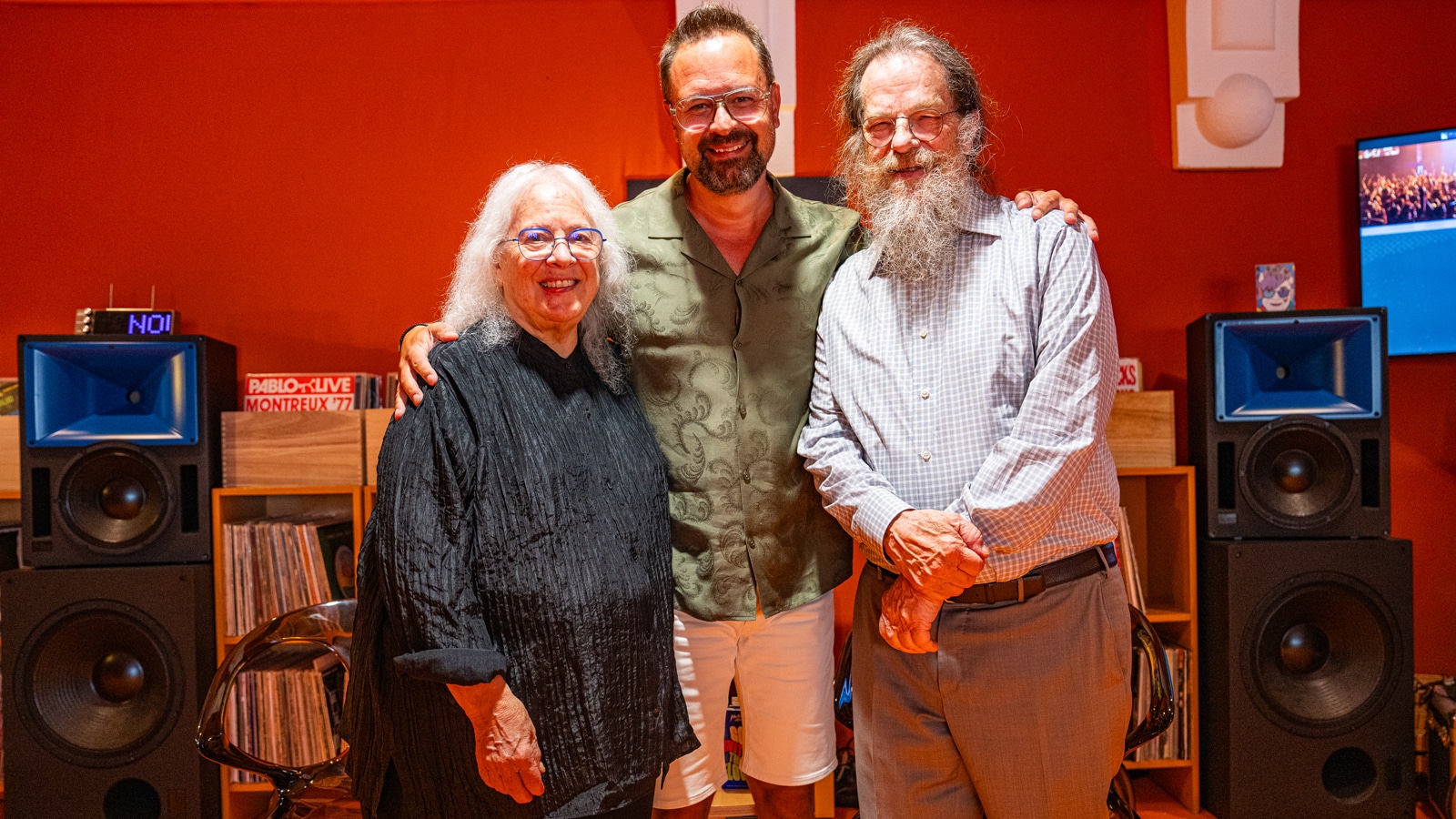
This summer, the Montreux Jazz Festival celebrated its 60th edition and Meyer Sound marked 40 years as its Global Official Sound Partner—a shared milestone that both organizations have been celebrating as the “60/40”: sixty editions of the festival, forty years of the partnership.
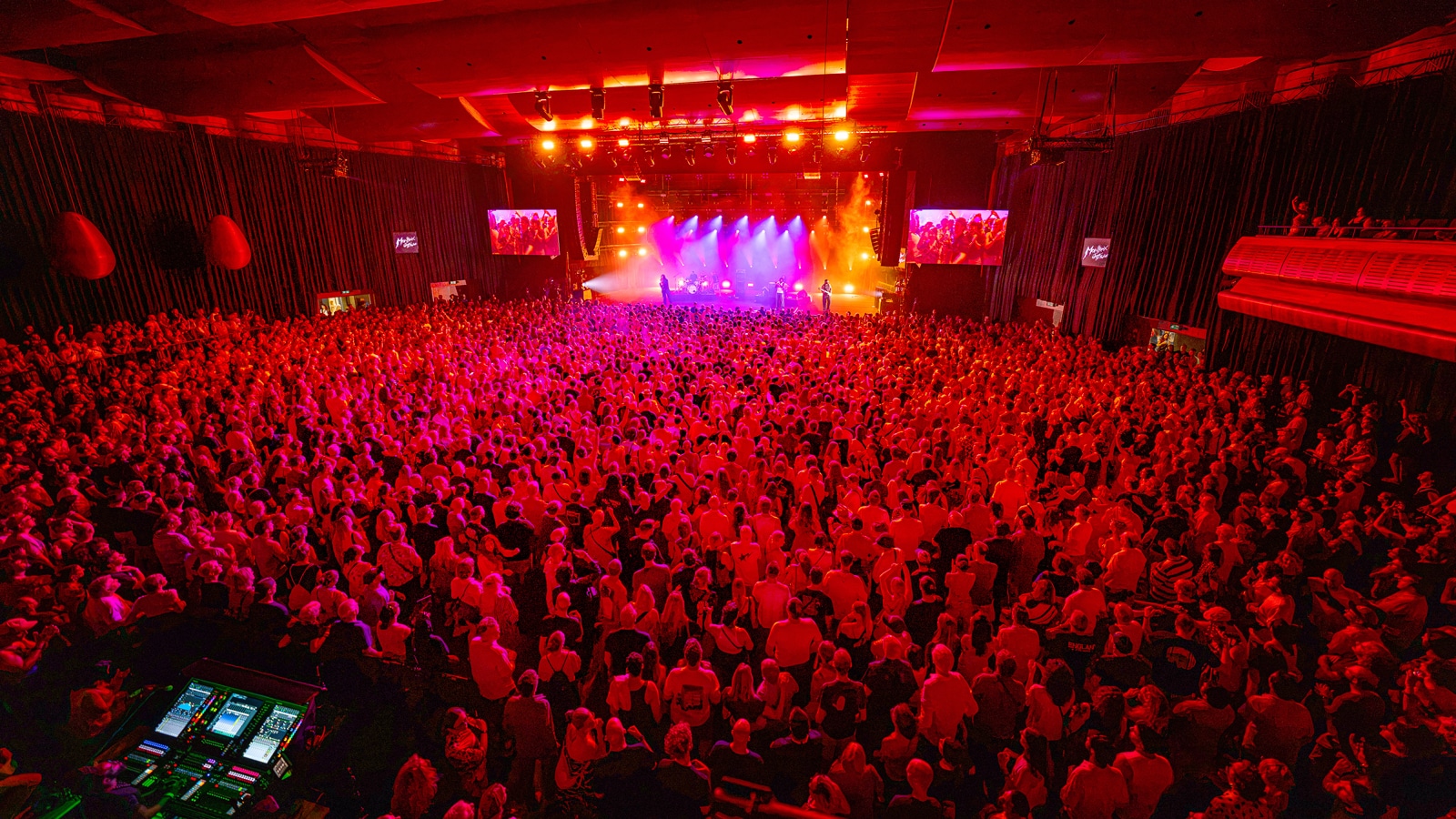
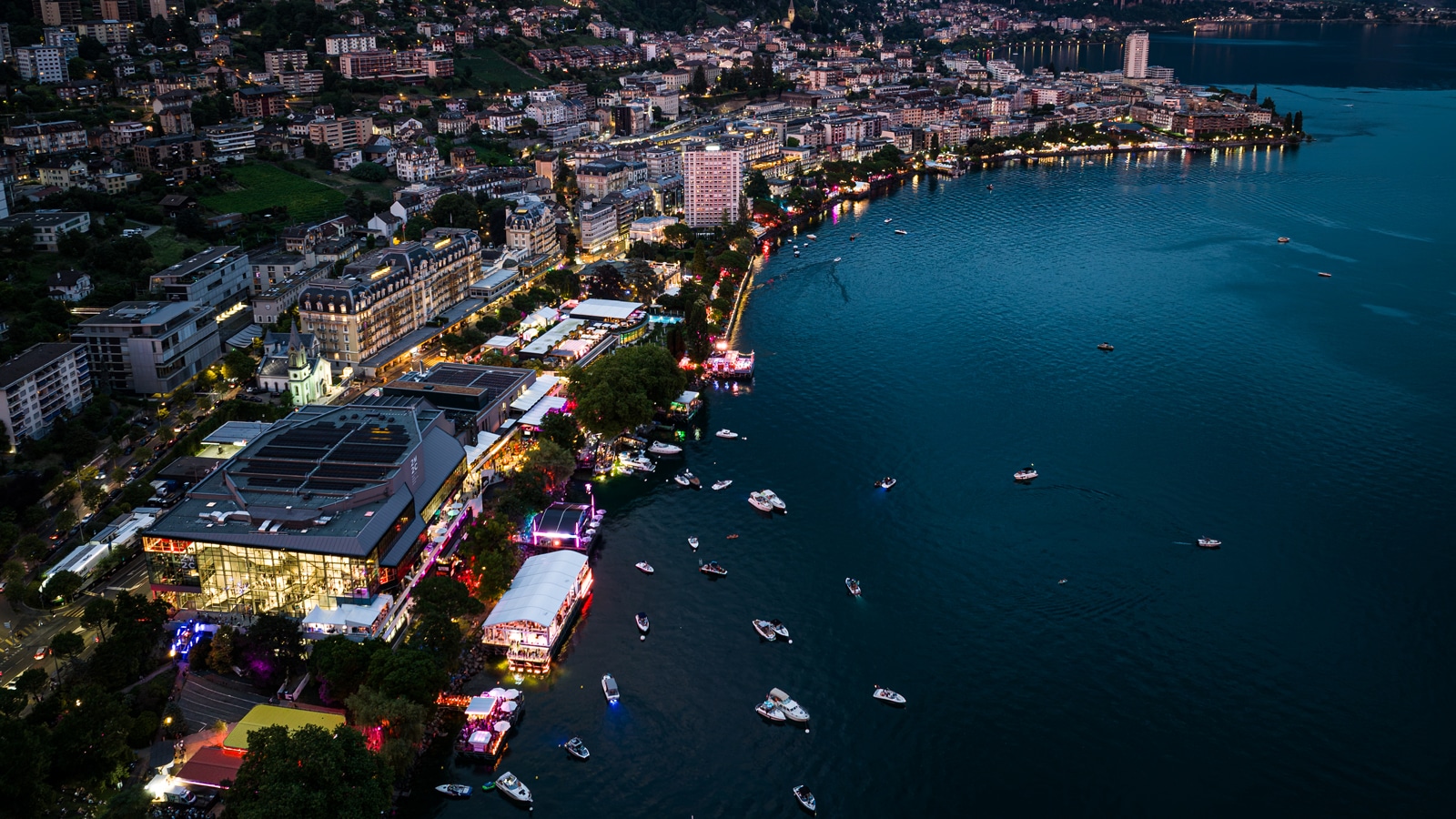
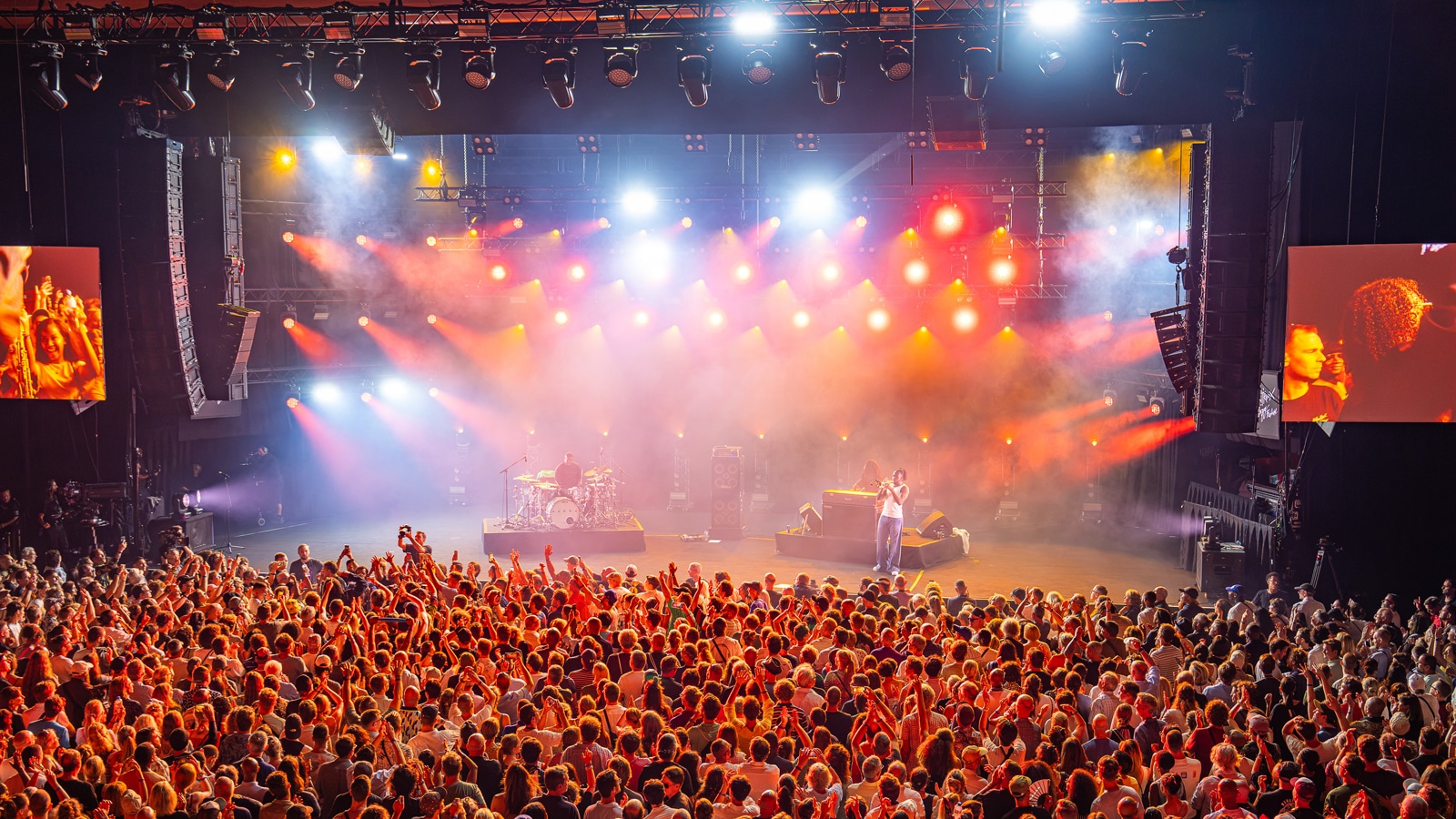
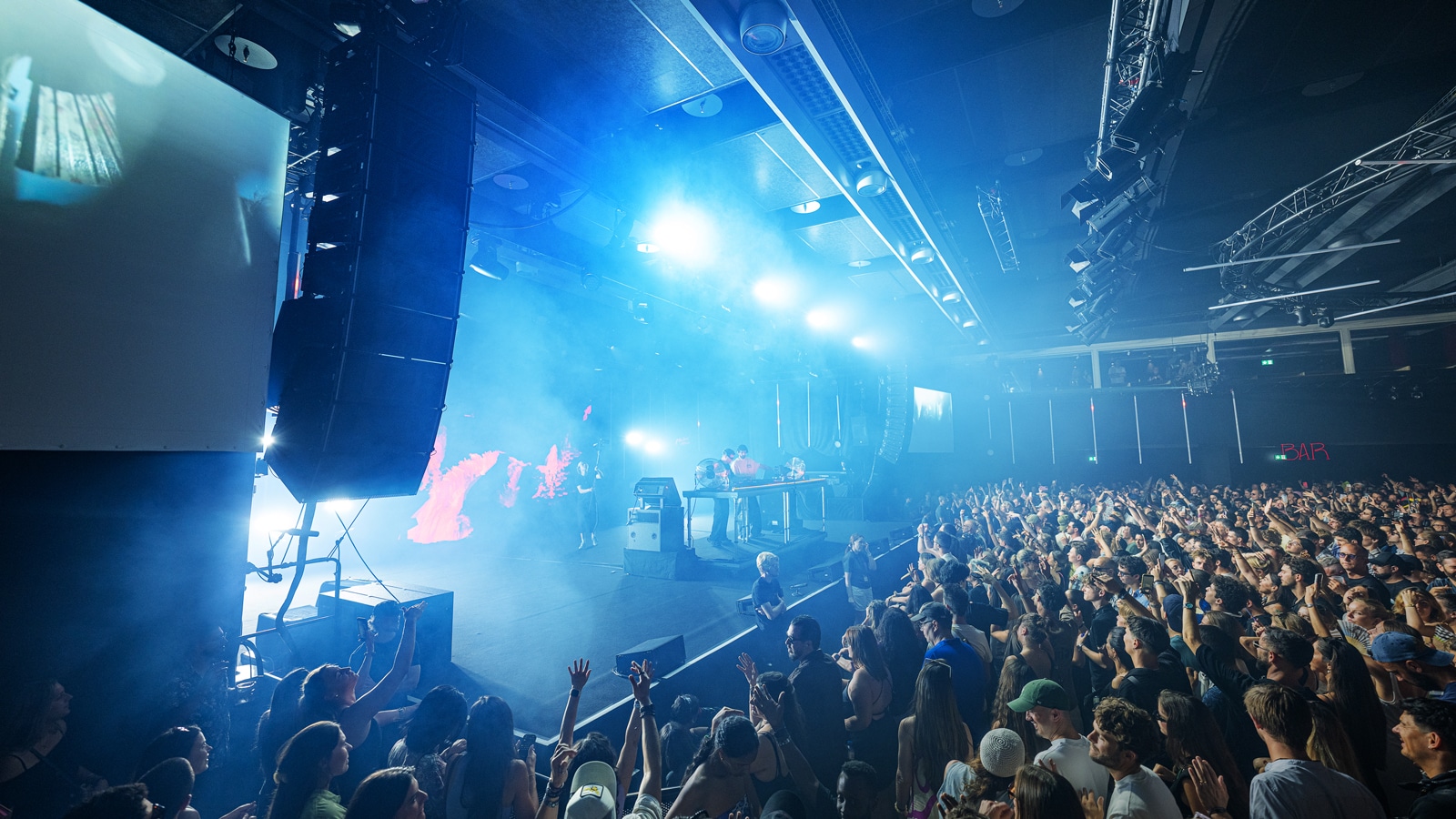
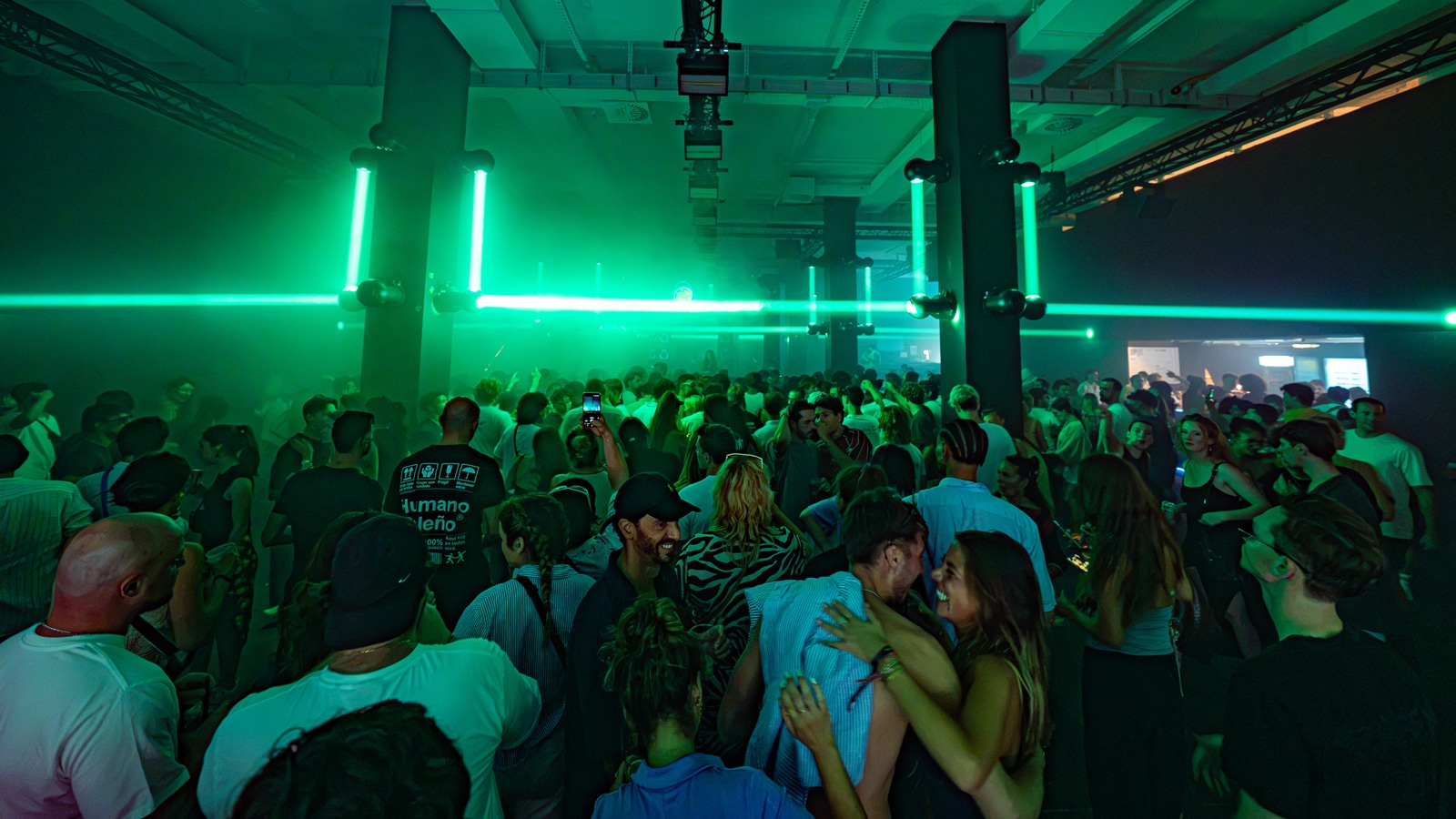
From July 3–18, the festival welcomed more than 250,000 concertgoers across more than 700 concerts and events along the shores of Lake Geneva in Montreux, Switzerland. At the heart of the celebration, the newly refurbished Montreux Music & Convention Centre housed the festival’s two flagship venues—the 4,000-capacity Auditorium Stravinski and the 2,000-capacity Montreux Jazz Lab—where performances bridged generations and continents, bringing together legends including Sting, Nick Cave & The Bad Seeds, Van Morrison, and Marcus Miller alongside newer voices like Tyla, Conan Gray, and PinkPantheress.
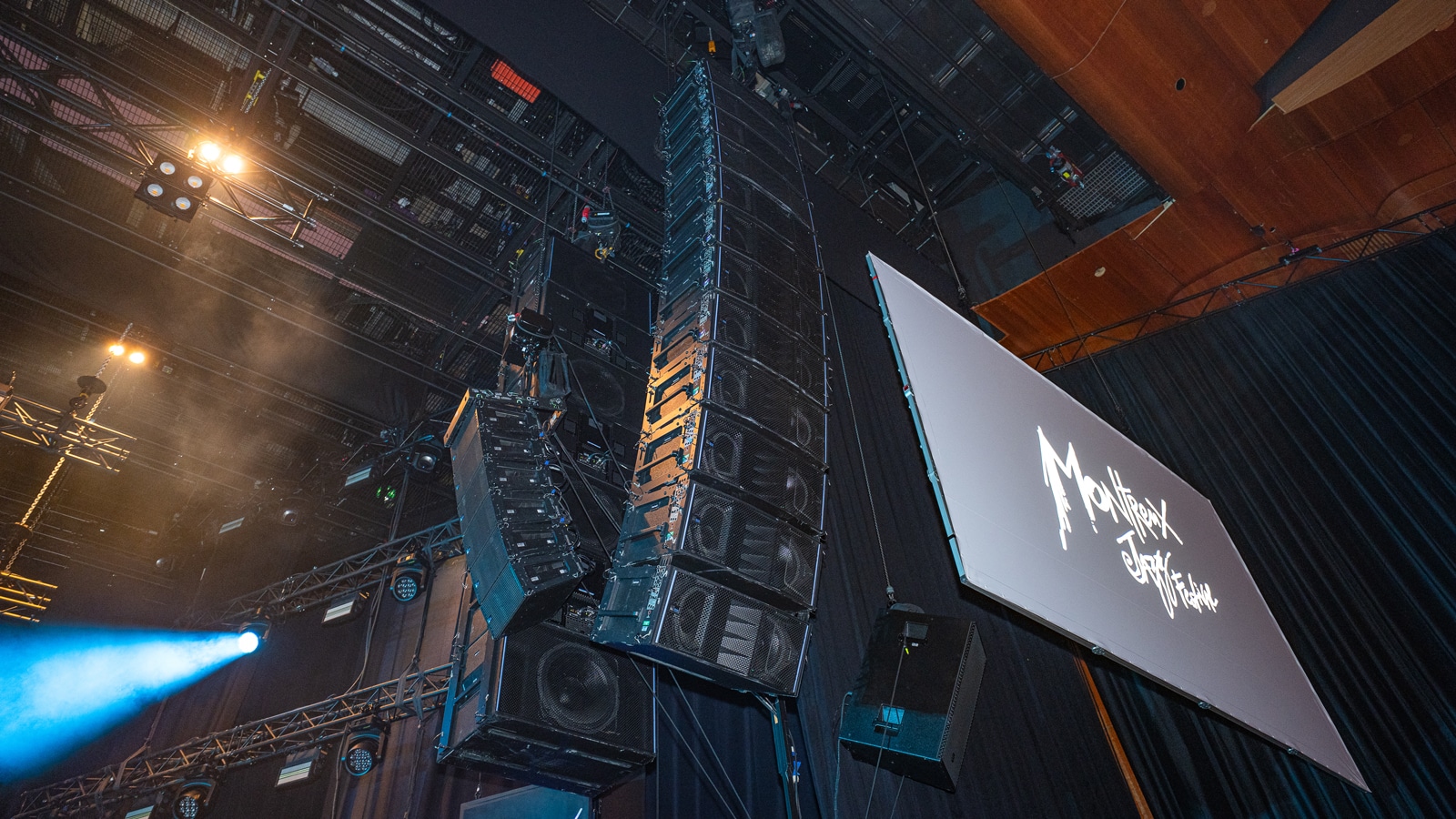
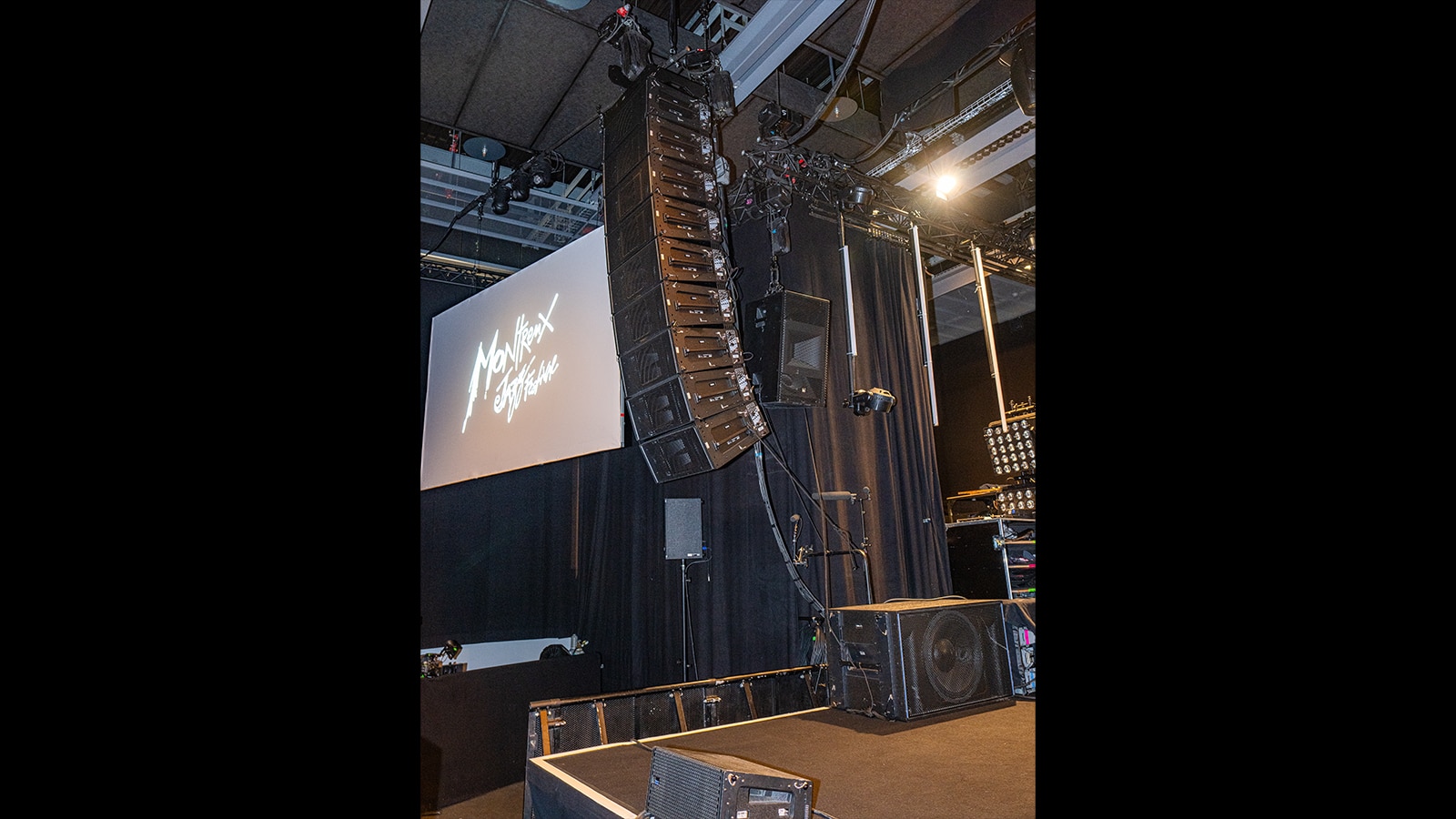
The 60/40 milestone arrived as one of the partnership’s most ambitious deployments: more than 700 loudspeakers spanning the festival’s 12 official stages and numerous bars, hospitality areas, and sponsor activations. At the center of that deployment was the Montreux debut of TIGRA, Meyer Sound’s newest line array, which had made its global festival premiere at Roskilde Festival earlier in the summer. All audio systems were supplied and integrated by Skynight, the Swiss rental company and longstanding production partner of the festival.
Inside the Auditorium Stravinski
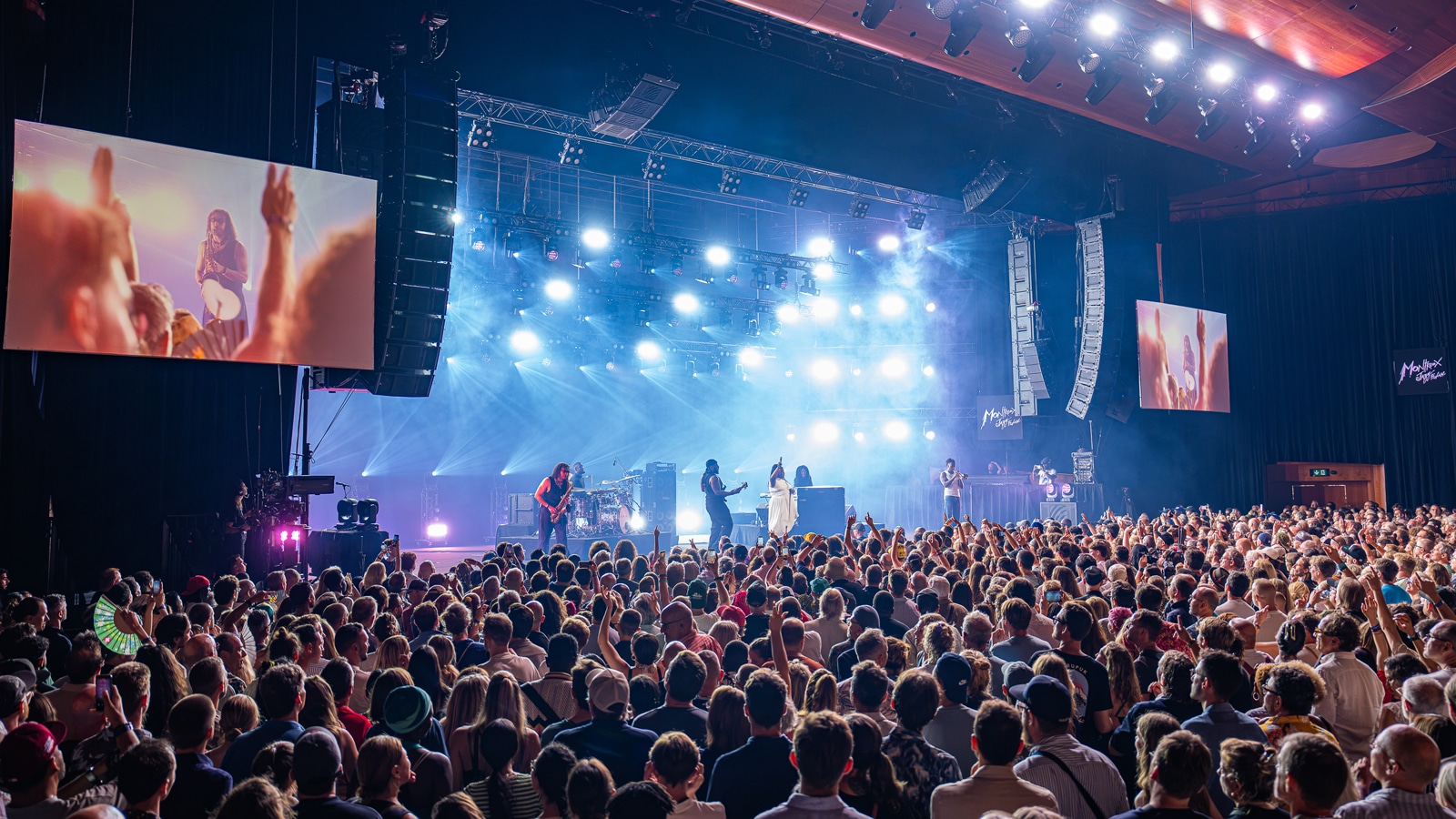
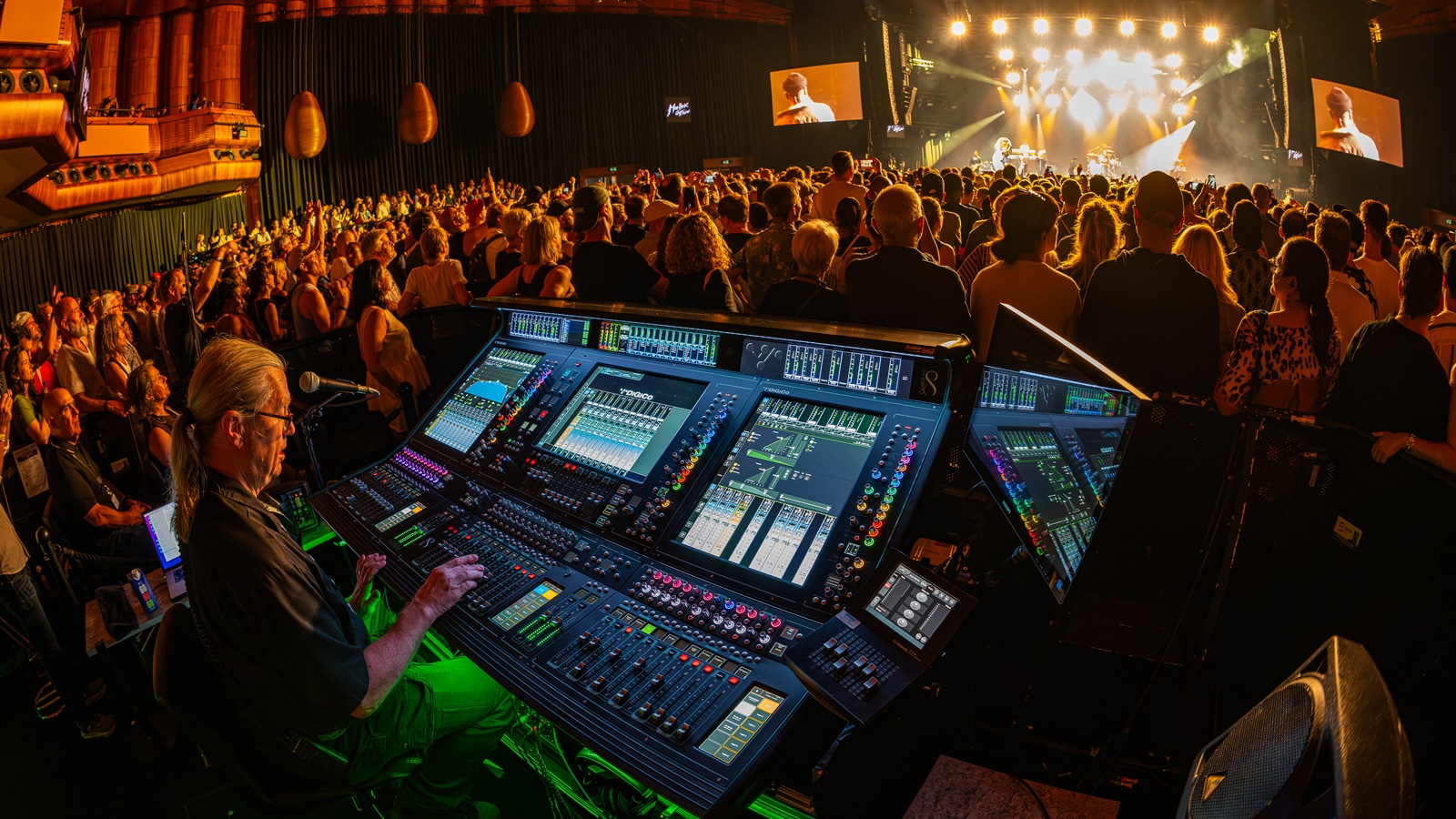
Auditorium Stravinski featured a PANTHER line array and 2100‑LFC low-frequency control element system. Opening night, however, called for something altogether different: British singer Raye performing a two-hour set on a custom rotating stage built on the floor of Stravinski, in the round, backed by a 22-piece ensemble, with front-of-house engineer Matthias Garrick at the desk. The production required its own system design, anchored by PANTHER‑M, with TIGRA used as fills working in concert with LEOPARD, LINA, ULTRA‑X80 loudspeakers, and 2100-LFC and 900-LFC low-frequency control elements, all focusing the audience’s attention to the central stage location.
Surprise guests Mark Ronson and Alicia Keys joined Raye on stage, capping a night that became one of the defining moments of the festival’s recent history. A 36-hour load-in with multiple crews working in shifts preceded the one-off show; by the following morning, the room had been fully reconfigured for standard festival programming.
“That was a Montreux moment,” says Andy Davies, Meyer Sound’s Senior Director of Product Management, who was onsite throughout the two-week run. “This festival looks to create those experiences, those ‘wow’ moments—and that makes it a lot of fun, even when it sets us a challenge. Right from day one, every department absolutely brought their A game, not only to this first incredible show, but to ensure the rest of the festival that followed maintained the high standards Montreux is known for.”
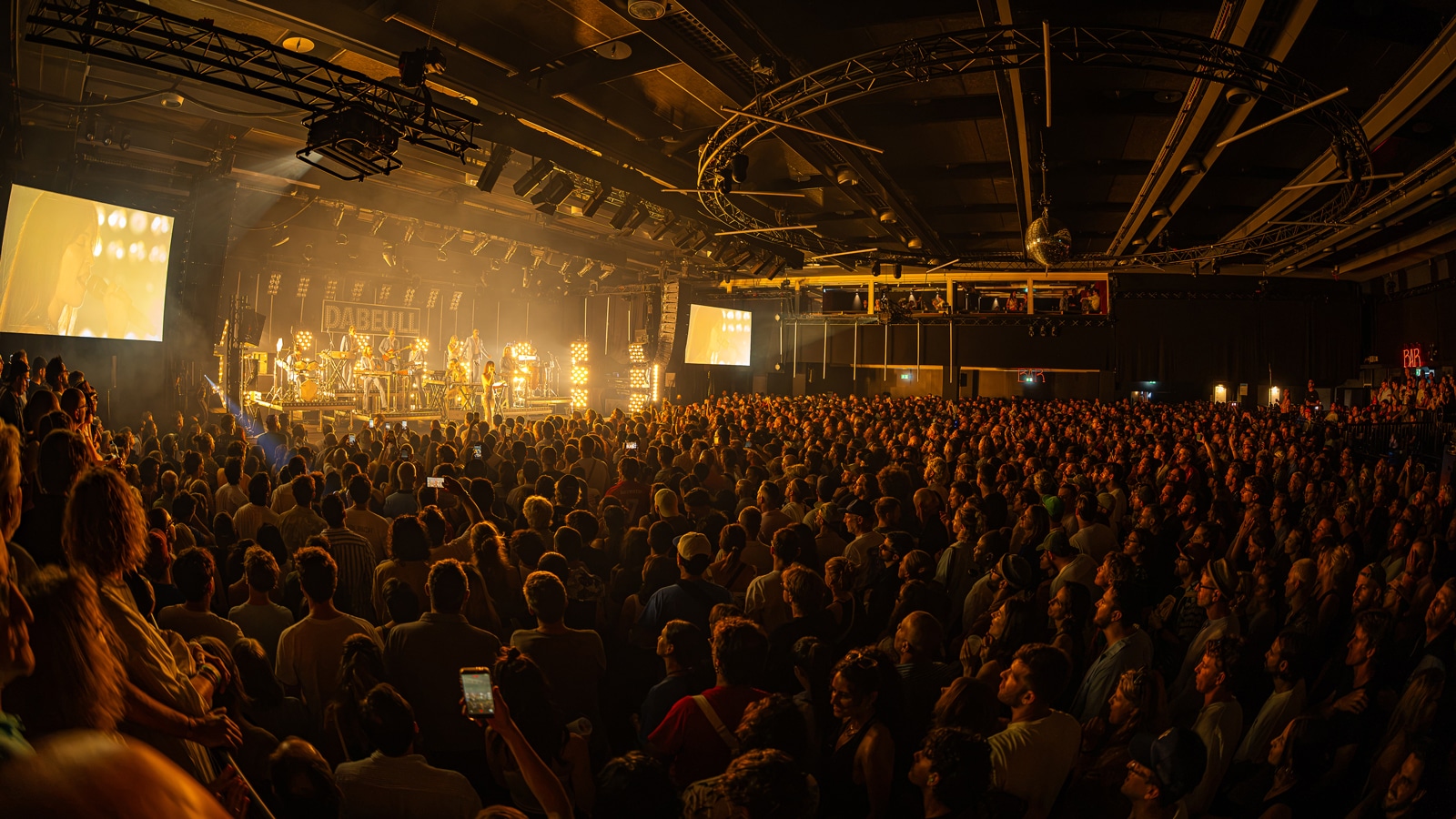
TIGRA at the Montreux Jazz Lab
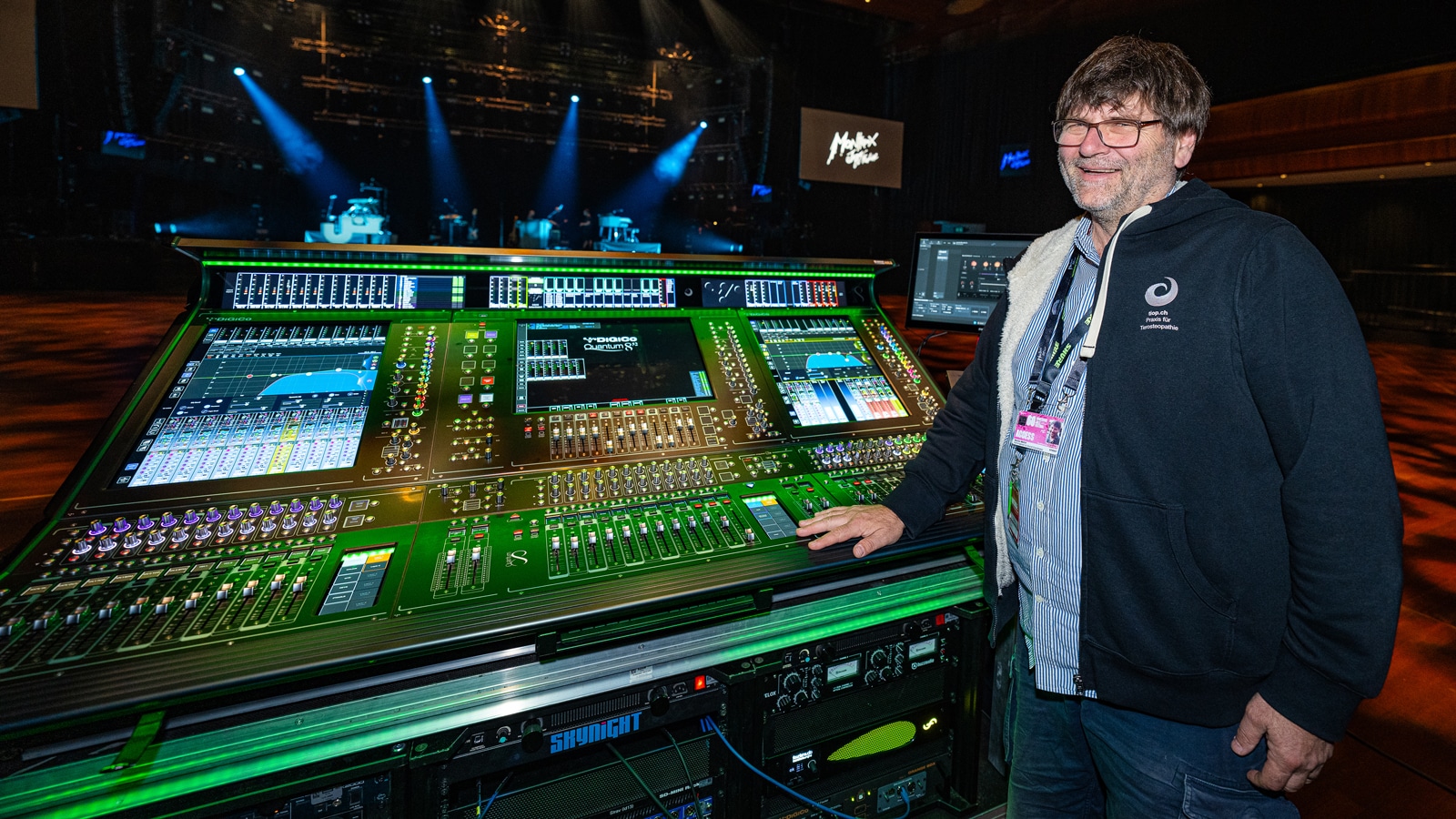
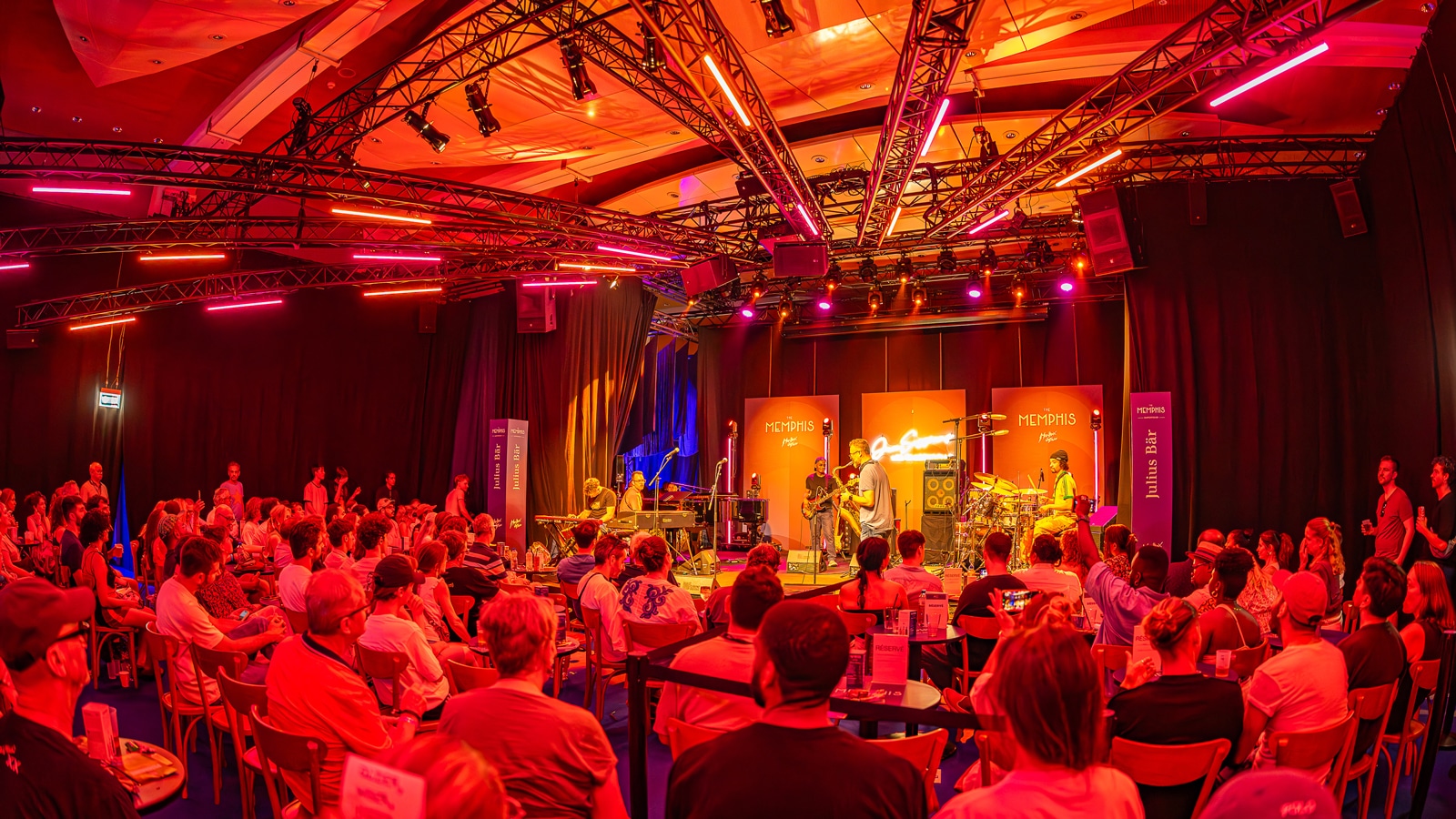
At the Montreux Jazz Lab, TIGRA anchored the system alongside 2100-LFC low-frequency control elements. “TIGRA is mid-size in format and weight and large-size in terms of sound,” says Martin Reich, the festival’s sound coordinator and resident engineer. “We now have a large-format sound signature in the Lab, where we had to deploy smaller systems in the past due to weight restrictions.”
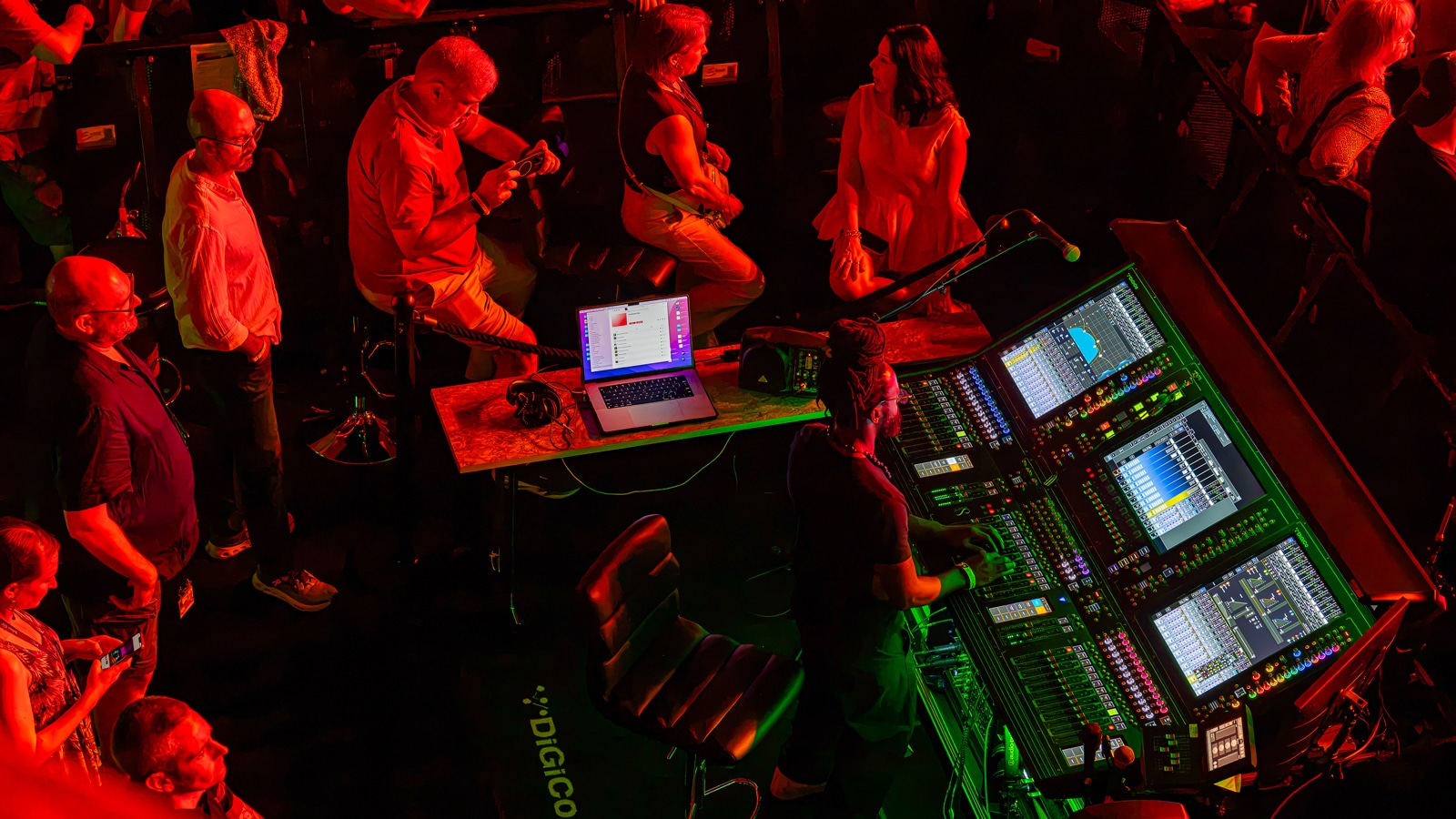
Visiting engineers responded immediately to the new system. London-based front-of-house engineer Femi Bello, who mixed multiple artists at the Lab during the festival, points to linearity as TIGRA’s defining quality. “If you have a quiet singer, if you have a loud singer, it just carries through strong—100% true to what you’re putting in the desk and what you’re sending out at the desk to the P.A.,” he says. “The balance is just right.” Frank Demaret, the Lab’s FOH engineer, observed the same: “They arrive, they open it, and they say: Okay, that’s alright. Maybe they touch a few things, but I never see a mixer say, ‘we have to change everything.’”
For Davies, TIGRA’s integration with the broader Meyer Sound family was among the festival’s most significant revelations. “We were walking the Stravinski, listening to TIGRA as center fills to the main PANTHER arrays—you just can’t hear the transition between the two,” he says. “These different loudspeakers are forming a family that you can use in multiple different ways.” Across the site, Nebra connection and control software unified the management of multiple generations of processing architecture—from legacy RMServers and Galileo GALAXY Network Platforms to TIGRA’s onboard GEN‑1 processing—within a single software platform.
A Blank Canvas
From stage to stage, predictability was the foundation on which everything else rested. “It is very reassuring to have a consistency in sonic signature throughout the entire festival site,” says Reich. “We can totally rely on the loudspeaker because we know how it sounds when things are working correctly.”
For visiting engineers, that consistency became creative freedom. “We are giving them an empty white canvas and they paint with their colors on it,” Reich says. “Seeing that one night an engineer attenuates a frequency range while the next night another engineer pushes the same range is proof that we achieved what we were aiming for. About 75% of the engineers don’t touch any equalization at all.”
A Meyer Sound technical team was onsite throughout the festival—and the resulting cross-generational mentorship between seasoned professionals and newer engineers is one of the relationship’s most enduring contributions. “There’s a real chance to transfer expertise because there’s such a wealth of it working here,” says Davies. “It’s a really cool place for young engineers.” Reich agrees: “To see some of the ideas we discussed appearing in final products is very rewarding. Being so close to the core team is also very inspiring for the young audio engineers running the daily business on all the stages.”
New systems, a fully renovated venue, new backstage configurations, and an opening night production of extraordinary complexity—and yet, Davies reflects, the 40th year of collaboration delivered on every count. “No surprises,” he says. “Just lots of happy experiences and good gigs.”
Beyond Lake Geneva
As the Montreux Jazz Festival continues to extend its reach into new global markets—China, South Africa, Miami—Meyer Sound’s role is evolving alongside it. “The Miami organizing team told us that Meyer Sound had helped bring the sound of Montreux to their stage,” says Davies. “That was totally unsolicited. But that’s our aim—not just preserving the brand, but making sure it translates into every new market.”
“The Montreux Jazz Festival has always believed that the artist experience and the audience experience are inseparable—and that both begin with sound,” says Festival CEO Mathieu Jaton. “Our relationship with Meyer Sound is built on that shared conviction. It has lasted four decades because it has never stopped evolving. As we bring the festival to new audiences around the world, Meyer Sound is evolving alongside us—and that continuity matters deeply to everything we are building.”
For Meyer Sound co-founder Helen Meyer, the 60/40 anniversary speaks to something deeper than duration. “Forty years ago, Claude Nobs asked us to help him build something that had never quite existed before—a festival where the sound was held to the same standard as the music itself,” she says. “What moves me most, looking back, is how that idea has only grown. Every year at Montreux, we discover something new. That’s not an accident. It’s what happens when two organizations share the same values for long enough.”