
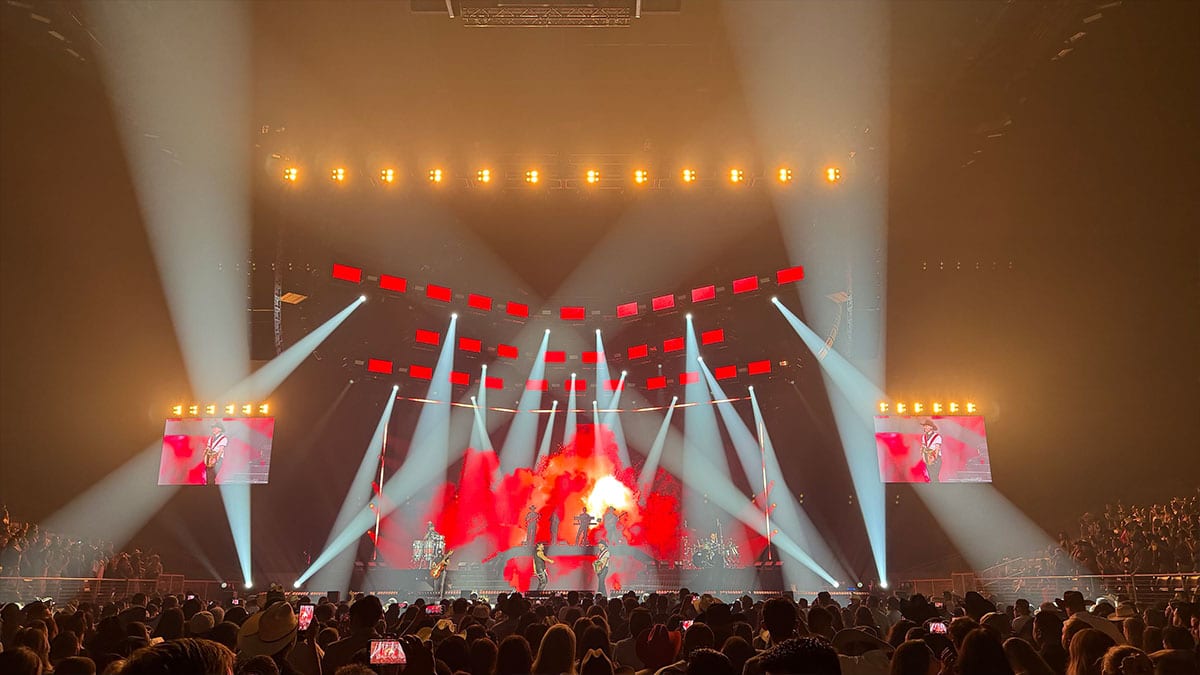
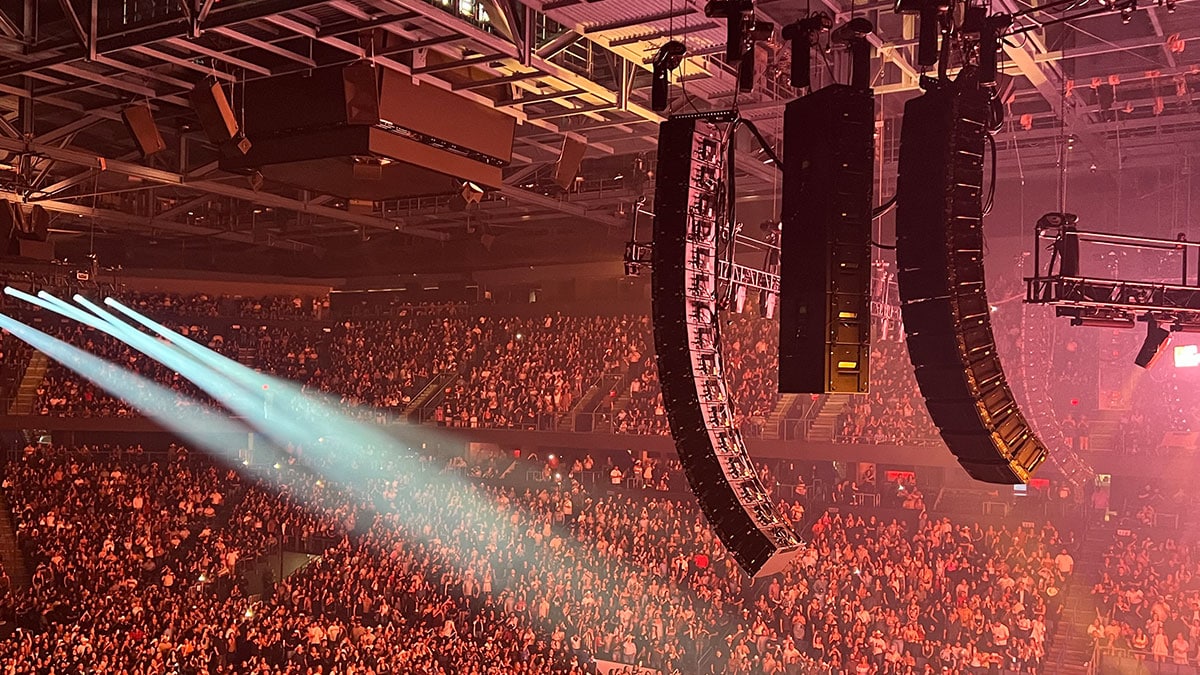
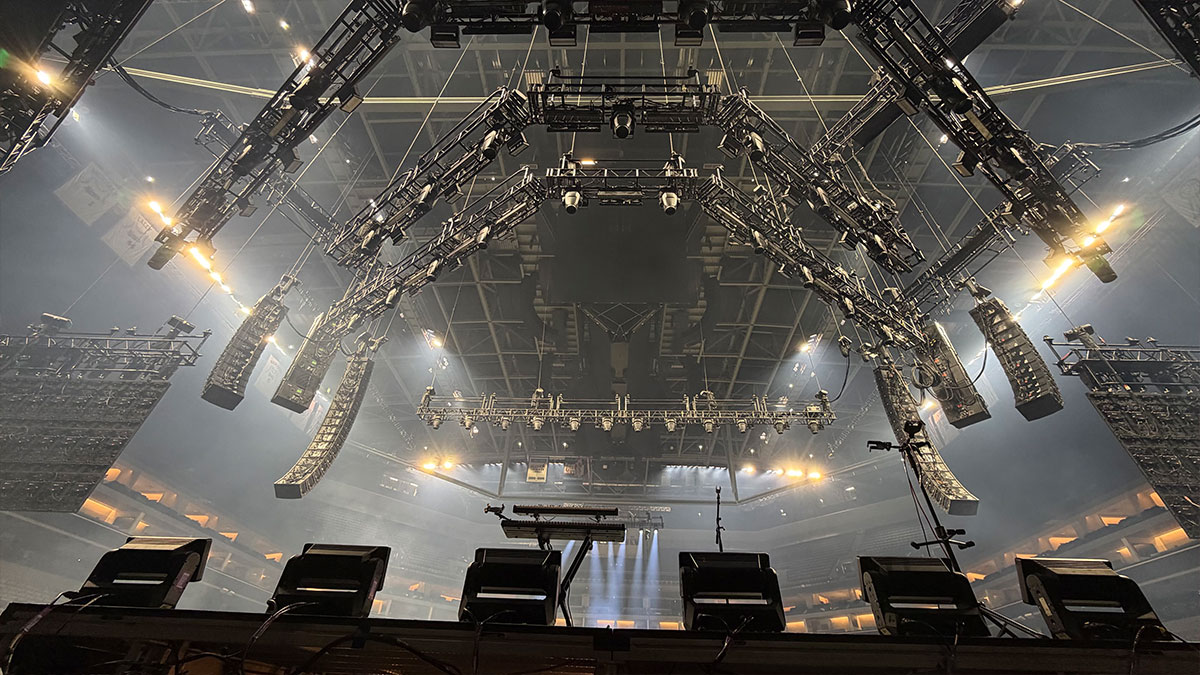
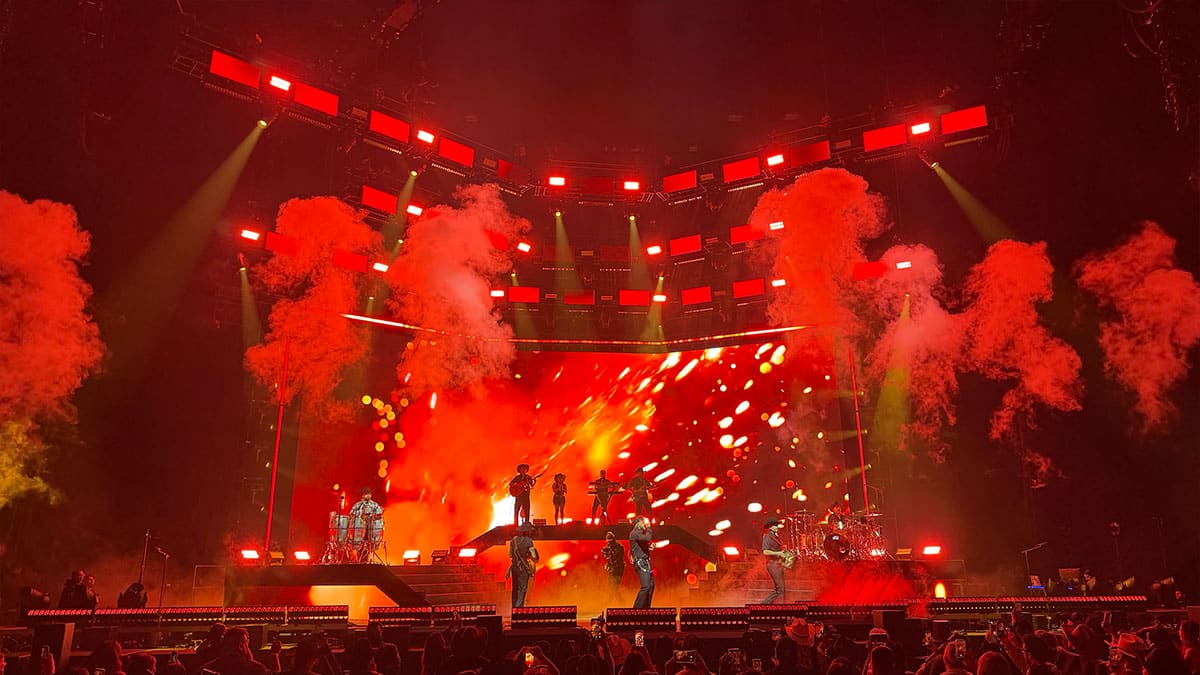
On tour with Grupo Frontera, LPS Productions provided a system featuring our #perfectpair, the PANTHER line arrays paired with 2100-LFCs. Together, the system delivers the power, headroom, and precision needed to bring the band’s dynamic performances to life in arenas.
We spoke with Front of House engineer Javier Diaz about his experience mixing with PANTHER, managing low-frequency energy, and delivering a consistent listening experience for audiences night after night.
Q: What made you choose the PANTHER system for this tour?
Javier Diaz: PANTHER gives us a lot of power and headroom while maintaining clarity and consistency throughout the venue. For a show like Grupo Frontera, where there are a lot of important musical elements happening at once, that definition is extremely important.
Q: How would you describe the sound out front? What does PANTHER do particularly well for Grupo Frontera’s music?
Javier: One of the things I really like about PANTHER is the clarity and separation. Grupo Frontera’s music has a lot of layers. The vocals have to stay present and natural, and the accordion has to cut through without sounding harsh.
The drums and percussion also come through with a lot of definition. You get the punch and impact of the kick and the low-end instruments while still being able to hear the individual percussion elements clearly.
PANTHER allows the mix to stay open and detailed. You can push the show to a high energy level without losing the musical definition.
Q: How do the 2100‑LFC low-frequency control elements shape the low end in arenas?
Javier: The 2100-LFC gives us the impact and weight that the show needs without making the mix feel muddy or overwhelming.
In an arena, controlling low frequencies is always a challenge because every room reacts differently. Having a system that can deliver that much energy while maintaining definition makes a huge difference.
Q: Is the mix consistent from one arena to the next, night after night?
Javier: Yes, that’s one of the biggest advantages. Every arena is different, so there will always be adjustments, but the system gives us a very consistent starting point every night.
That consistency allows me to focus more on the music and the performance instead of constantly fighting the room. Once the system is properly tuned and deployed, I know what I’m hearing at FOH, and I can trust that the audience is getting a similar experience throughout the venue.
Q: How does the system deliver clean, controlled sound for musicians onstage?
Javier: One of the important things with a system this powerful is making sure that the energy stays controlled and doesn’t create unnecessary problems onstage.
The coverage and control help keep the sound focused where it needs to be. That means the musicians can perform in a cleaner environment without the PA overwhelming the stage. When the stage environment is better, everybody performs better.
Q: Have there been moments on tour when the system’s performance really stood out to you?
Javier: There have been several moments where you really feel the system working as a complete package, especially when the band goes from a very intimate musical moment into a big, high-energy section of the show.
That’s where PANTHER really stands out to me. You can go from something very detailed and dynamic to a massive arena moment, and the system still maintains clarity and impact. The audience feels the energy, but you don’t lose the musical detail.
Q: What does a great PA system mean to you, and what has PANTHER brought to this tour?
Javier: For me, one of the most important things is that a great PA system isn’t just about being loud. It’s about consistency, clarity, coverage, and giving the audience the same experience no matter where they’re sitting.
With Grupo Frontera, the music has a lot of emotion and detail, and my job as the FOH engineer is to make sure that all of that translates to the audience. PANTHER gives me the power and headroom for the big moments, but also the detail and control needed for the quieter, more intimate parts of the show.
At the end of the day, that’s what matters most: being able to mix confidently and knowing that the system is accurately translating what we’re creating at FOH to the entire audience.