
Everybody who’s come through has been happy with it. For one-nighters, we haven’t had to rent a system this year. I love the sound in the room.”
Mike MeucheAudio Engineer, Aronoff Center for the Arts
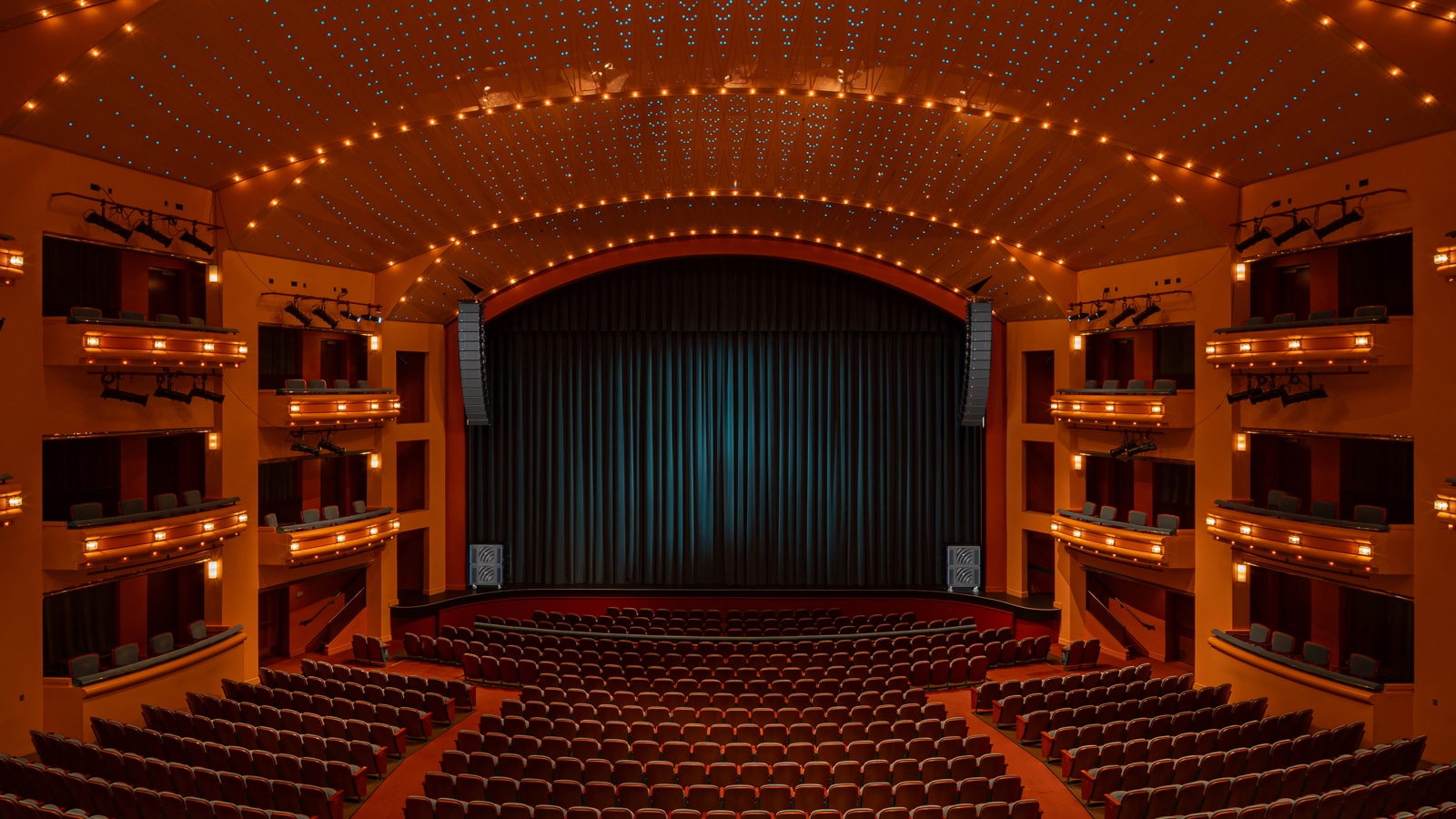
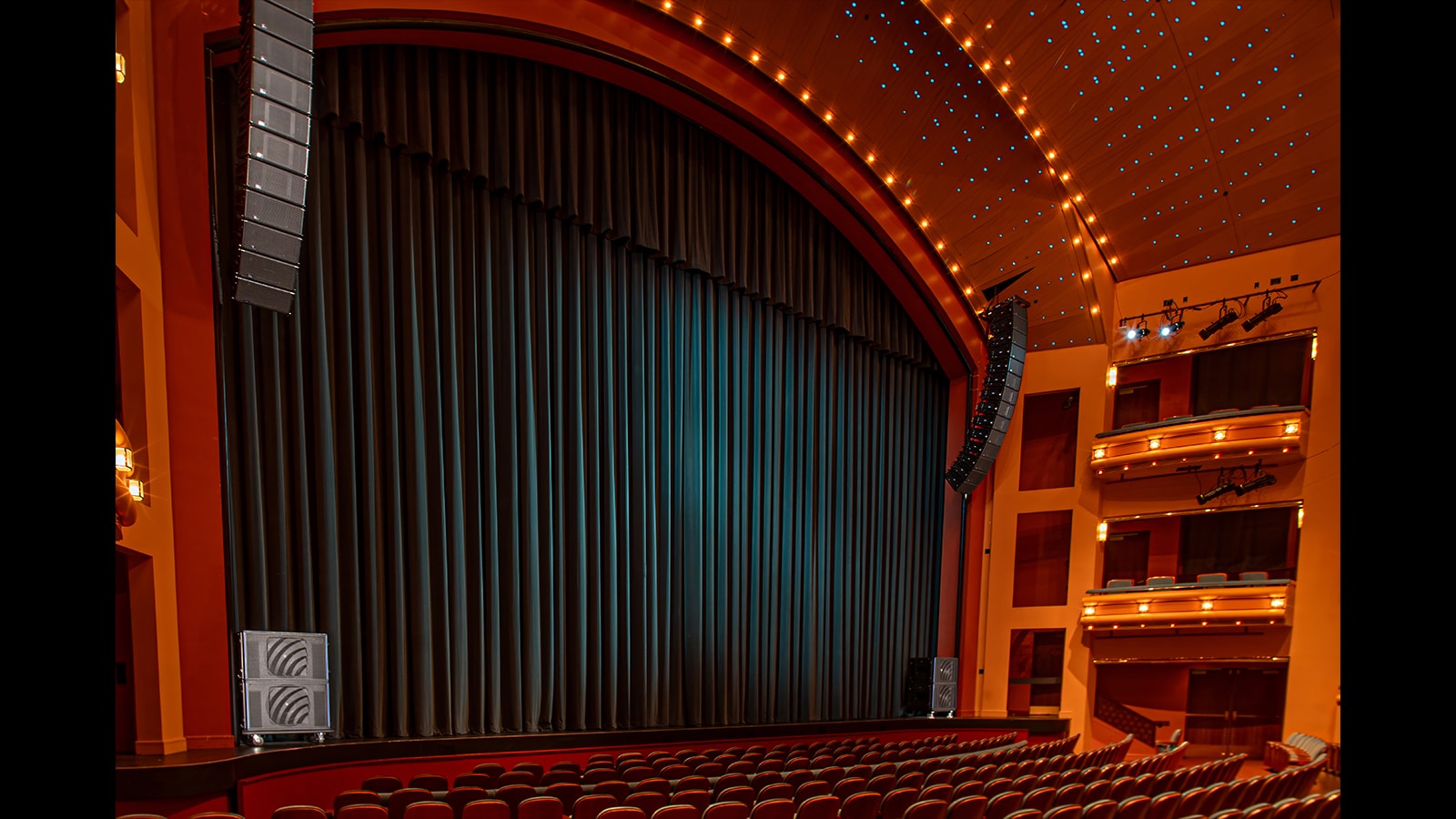
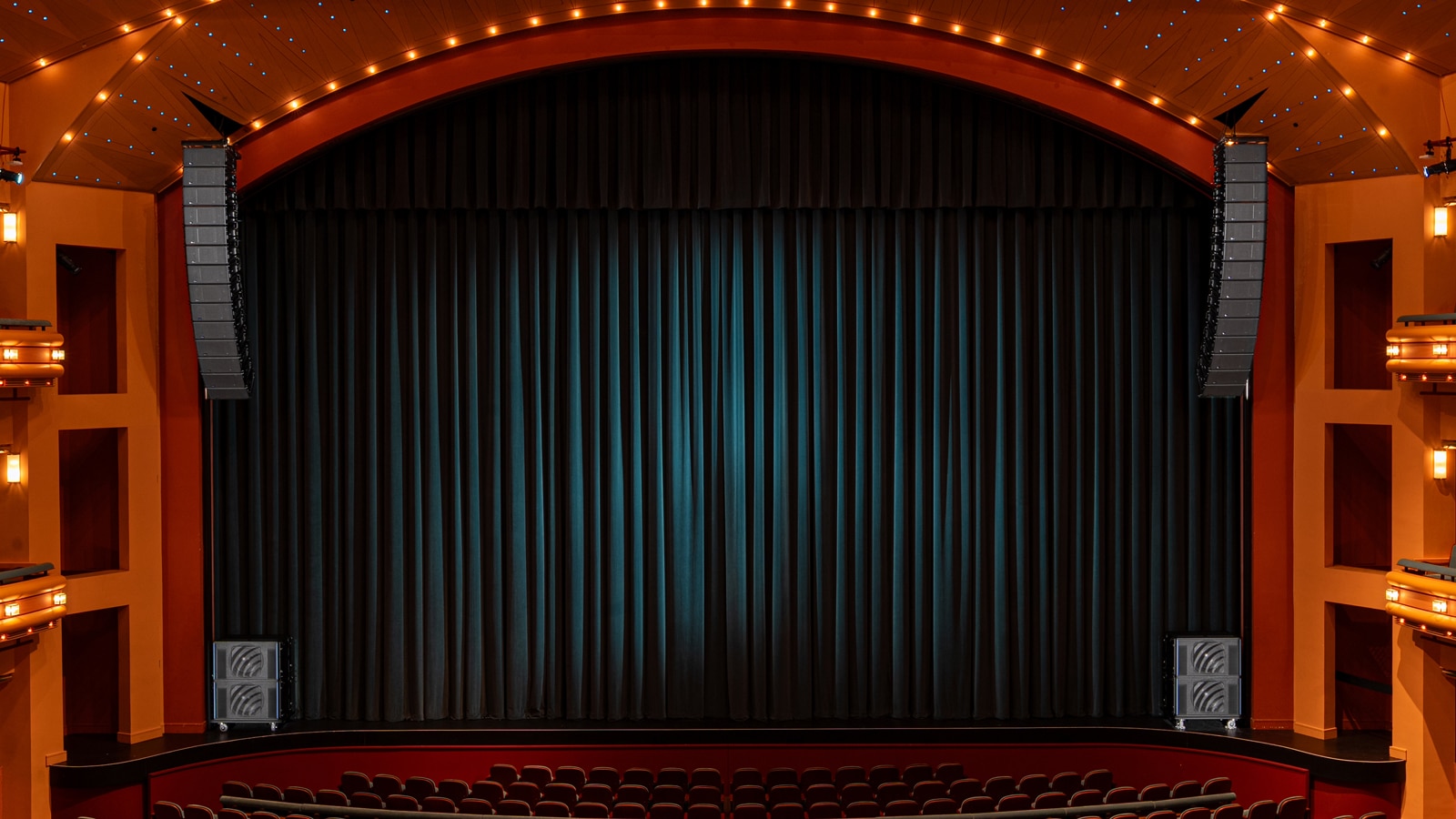
The Aronoff Center for the Arts in downtown Cincinnati has upgraded its main performance space with a new Meyer Sound LEOPARD system in its 2,700-seat Procter & Gamble Hall. Designed and integrated by Ovation Audiovisual, the installation builds on the venue’s 30-year relationship with Meyer Sound, delivering uniform coverage and the flexibility demanded by today’s Broadway tours and high-impact productions.
Opened in 1995 and designed by architect César Pelli, the Aronoff Center serves as Cincinnati’s primary Broadway stop while also hosting concerts, symphony performances, ballet, and special events. As the home of First Financial Bank Broadway in Cincinnati, presented by TriHealth, Procter & Gamble Hall regularly welcomes national touring productions with exacting technical expectations. The venue must support dialogue-driven musicals, high-energy concerts, and orchestral programming—often within the same week—requiring equal emphasis on clarity, headroom, and uniform coverage across all seating areas.
The hall originally opened with a Meyer Sound system that served reliably for three decades. With advancements in loudspeaker technology and networked processing, the organization elected to modernize while building on that legacy.
“We knew we wanted to move to a line array to get more even coverage,” explains Mike Meuche, audio engineer at the Aronoff Center, noting that coverage was only part of the equation: “The previous system was more suited to light reinforcement and lectures. Anytime we had louder one-nighters coming in who wanted to push upward of 90 or 100 dB, we were renting a system. That took significant time to put in.”
The hall’s multi-tiered seating geometry presents distinct coverage challenges, particularly in the upper balcony. The upgrade provided an opportunity to apply modern modeling and system design tools to refine tonal consistency throughout the space.
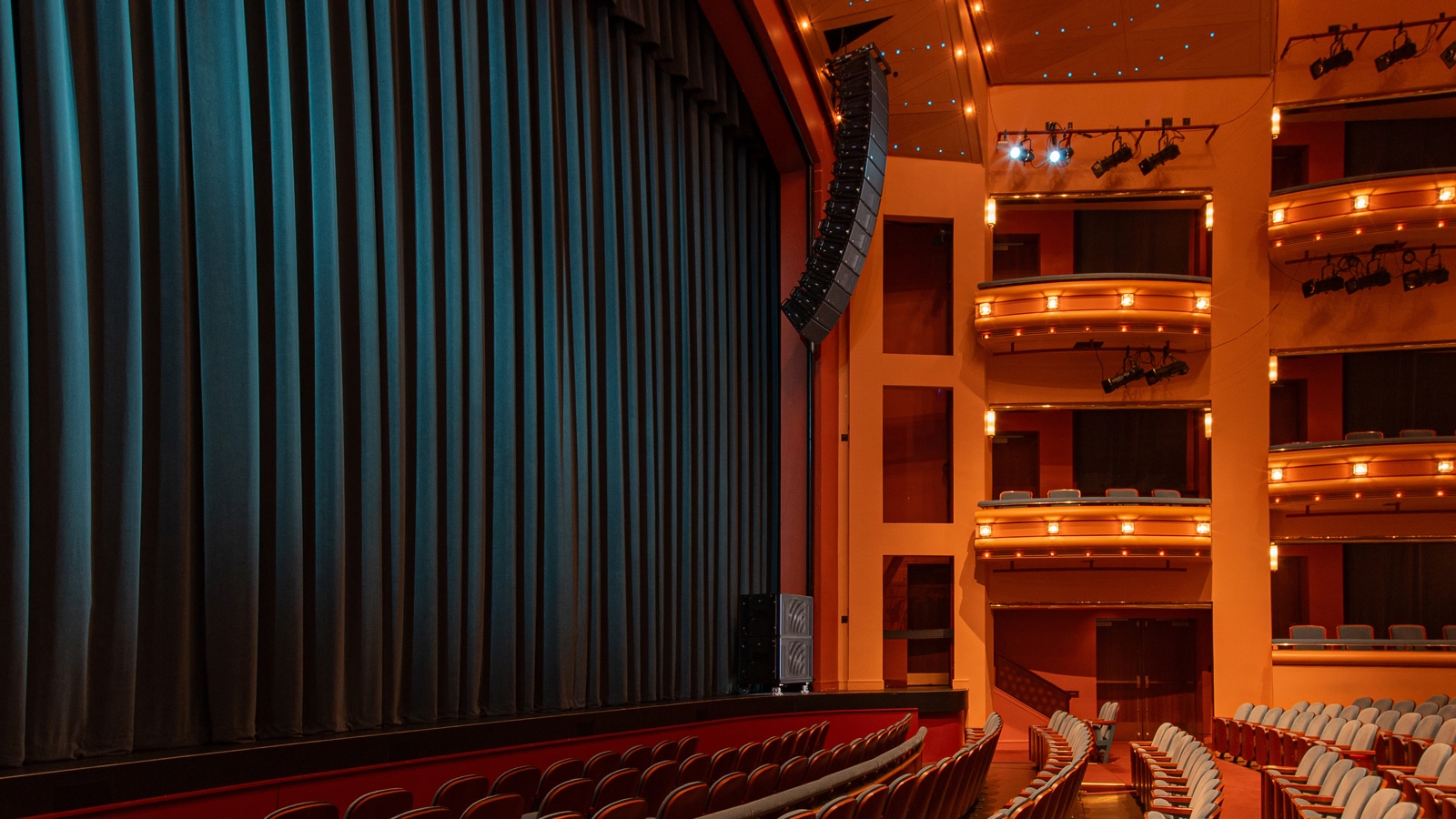
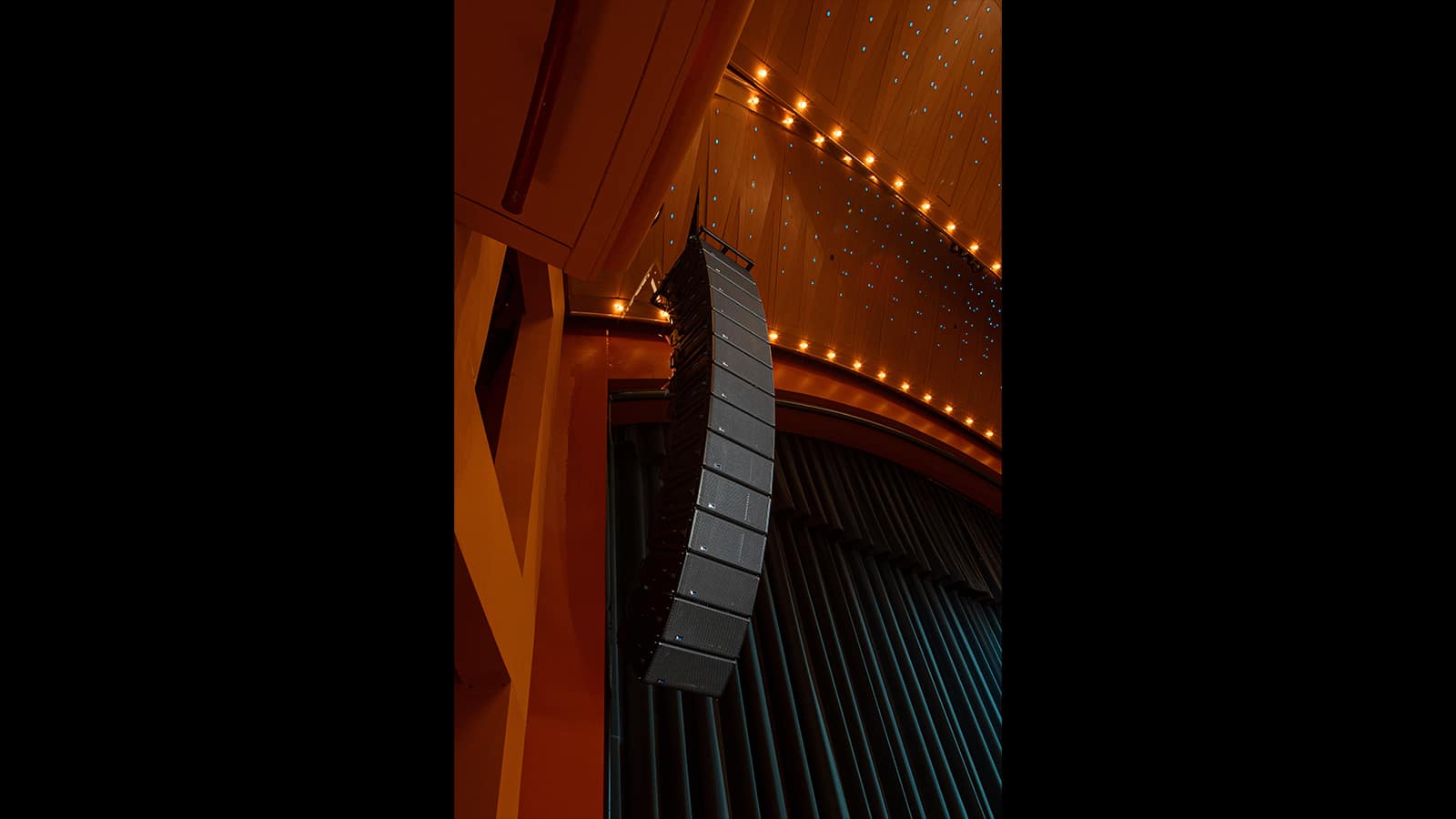
The new system centers on 28 LEOPARD compact linear line array loudspeakers, supported by eight 900-LFC and four 2100‑LFC low-frequency control elements and three ULTRA‑X82, one ULTRA‑X80, and two ULTRA‑X40 loudspeakers as fills. Everything is driven by the Galileo GALAXY Network Platform, with support for Milan networking to accommodate touring and in-house workflows.
From the outset, Ovation prioritized measurable uniformity. The system was extensively modeled using Meyer Sound’s MAPP 3D system design and prediction tool to verify coverage and predict performance before installation began.
That predictive precision translated directly into real-world experience. From orchestra to upper balcony, the new system delivers consistent tonal balance and impact across seating areas while maintaining clarity throughout the hall. “We were able to show from the beginning that the system would perform within plus or minus a dB and a half throughout the space,” says Ovation co-owner Bob Cochran. “That modeling gave everyone confidence. We knew the system would hit the target.”
Rigging constraints required creative engineering—particularly in the low-frequency domain. Limited hang points and overhead positions prioritized for touring productions forced the design team to rethink subwoofer deployment.
“The real estate where we ideally would have flown the subs was unavailable, so we engineered a gradient array to steer low end up into the balcony,” Cochran explains. “That’s one of those tricky scenarios where Meyer Sound’s depth of understanding around the physics of sound was instrumental in solving a challenging scenario.”
For Ovation, the project represents the beginning of a partnership, says Cochran. “We really understand how they’re using the space and how they’re using the system,” he explains. “That context allows us to bring more accurate solutions than if we just installed a P.A. and walked away.”
Hybrid operation was fundamental to the system design. Broadway tours frequently arrive with their own main systems while relying on in-house delays and fills. GALAXY processing provides touring engineers with a familiar control environment, enabling efficient alignment between visiting and house infrastructure. Presets allow venue staff to optimize the system for ballet, symphonic, or high-SPL concert use without reconfiguring the core architecture.
The day-to-day operational impact has been immediate. With system control accessible at front of house, staff can make adjustments more efficiently, and touring productions that once required supplemental rentals now rely confidently on the house system’s capabilities.
“The Aronoff Center presents hundreds of events each year,” says Maddie Regan, general manager of the Cincinnati Arts Association. “Our new Meyer Sound LEOPARD system affords us the flexibility to provide world-class audio experiences for a wide range of events, including lectures, symphonies, Broadway productions, and choral events.”
“Everybody who’s come through has been happy with it,” adds Meuche. “For one-nighters, we haven’t had to rent a system this year. I love the sound in the room.”