
It’s a powerful new space to experience sound and video art collectively. That combination of experimentation and real-world application is what makes it so exciting.”
Eric HuebnerProfessor of Piano and Chair of the Department of Music
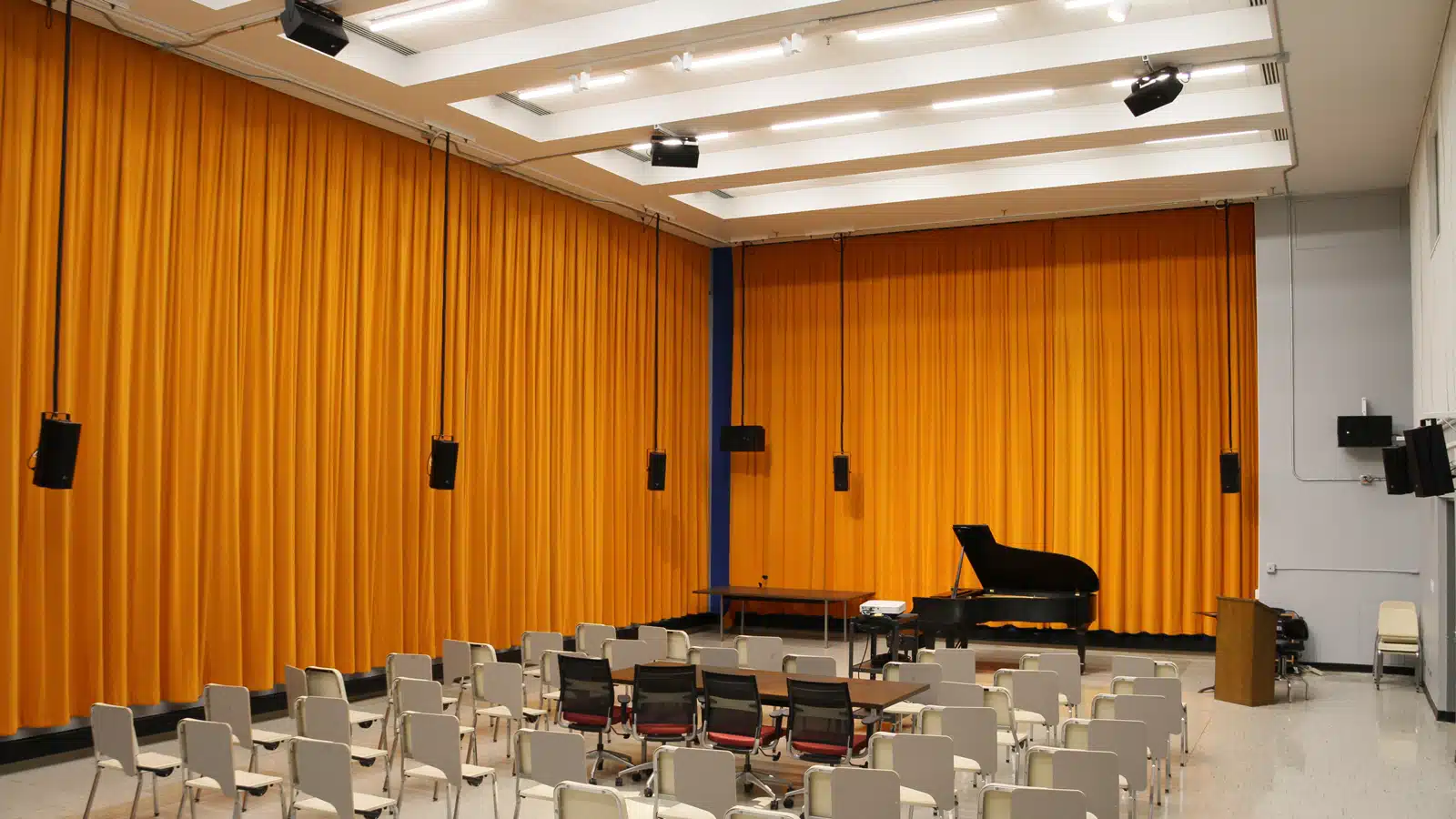
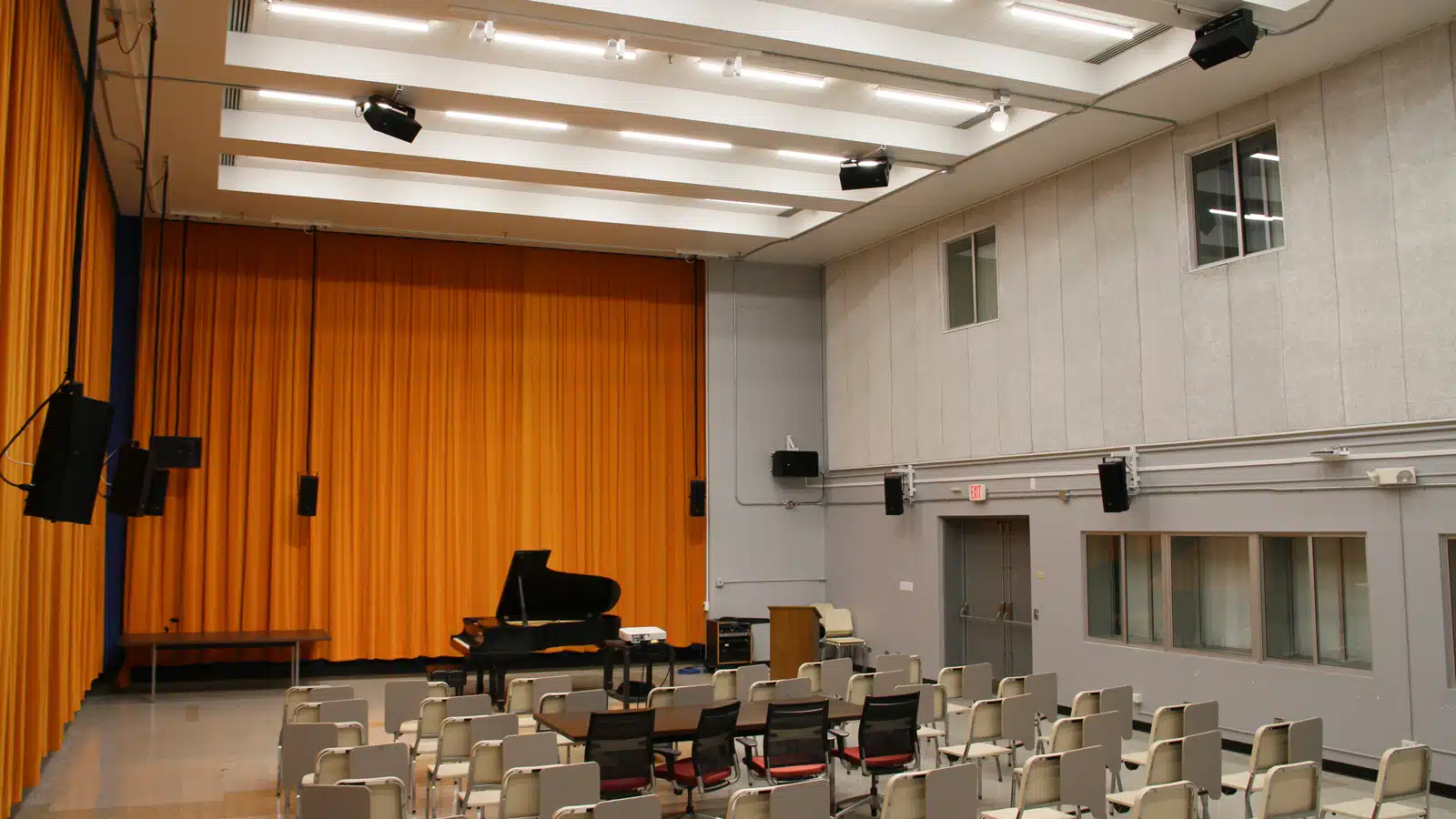
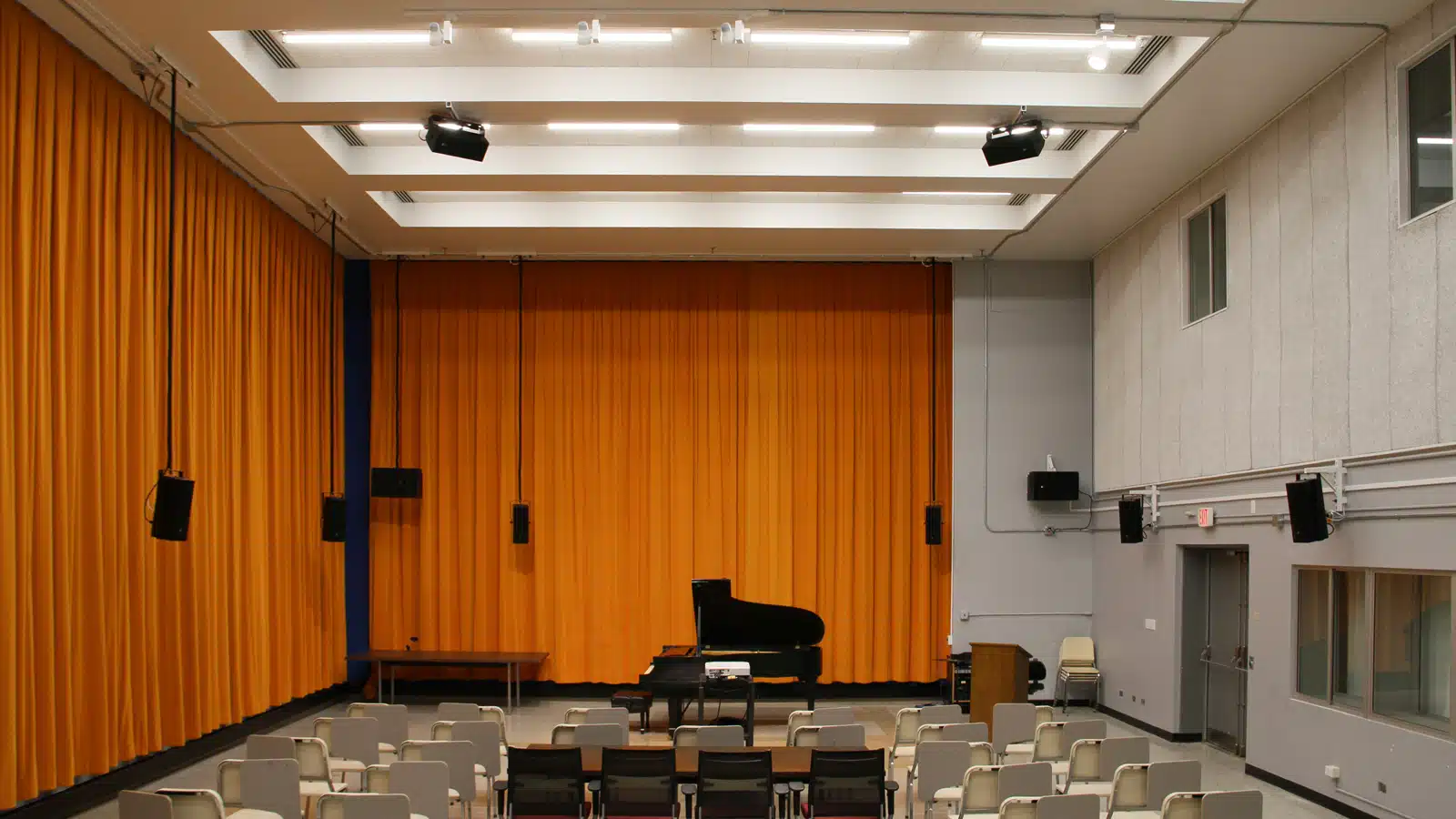
The University at Buffalo’s Department of Music has unveiled a new immersive audio space equipped with a full Meyer Sound system featuring NADIA audio processing and the Spacemap Go spatial sound design and mixing tool. The project creates a state-of-the-art environment for composition, performance, and research.
Part of the State University of New York system, the University at Buffalo has long been known for its leadership in contemporary composition and experimental music. The new installation builds on that legacy, positioning UB at the forefront of spatial audio exploration.
“It’s something we’d wanted to do for years,” says Eric Huebner, professor of piano and chair of the Department of Music. “UB has a long history in experimental and 21st-century music, and this project finally gives those efforts a permanent home for immersive sound.”
The project was funded through a grant from the Office of the Vice President for Research and Economic Development and executed through a collaboration between Meyer Sound’s Spatial Sound team, the UB team, and AV integrator DBS Audio Systems, which supplied and installed the system. “We worked closely with Steve Ellison and Ryan Cornelius from Meyer Sound, and with Dave Brotman and Mike Shoulson from DBS,” says Chris Jacobs, director of music technology at UB. “The collaboration between all three teams made the process smooth from start to finish.”
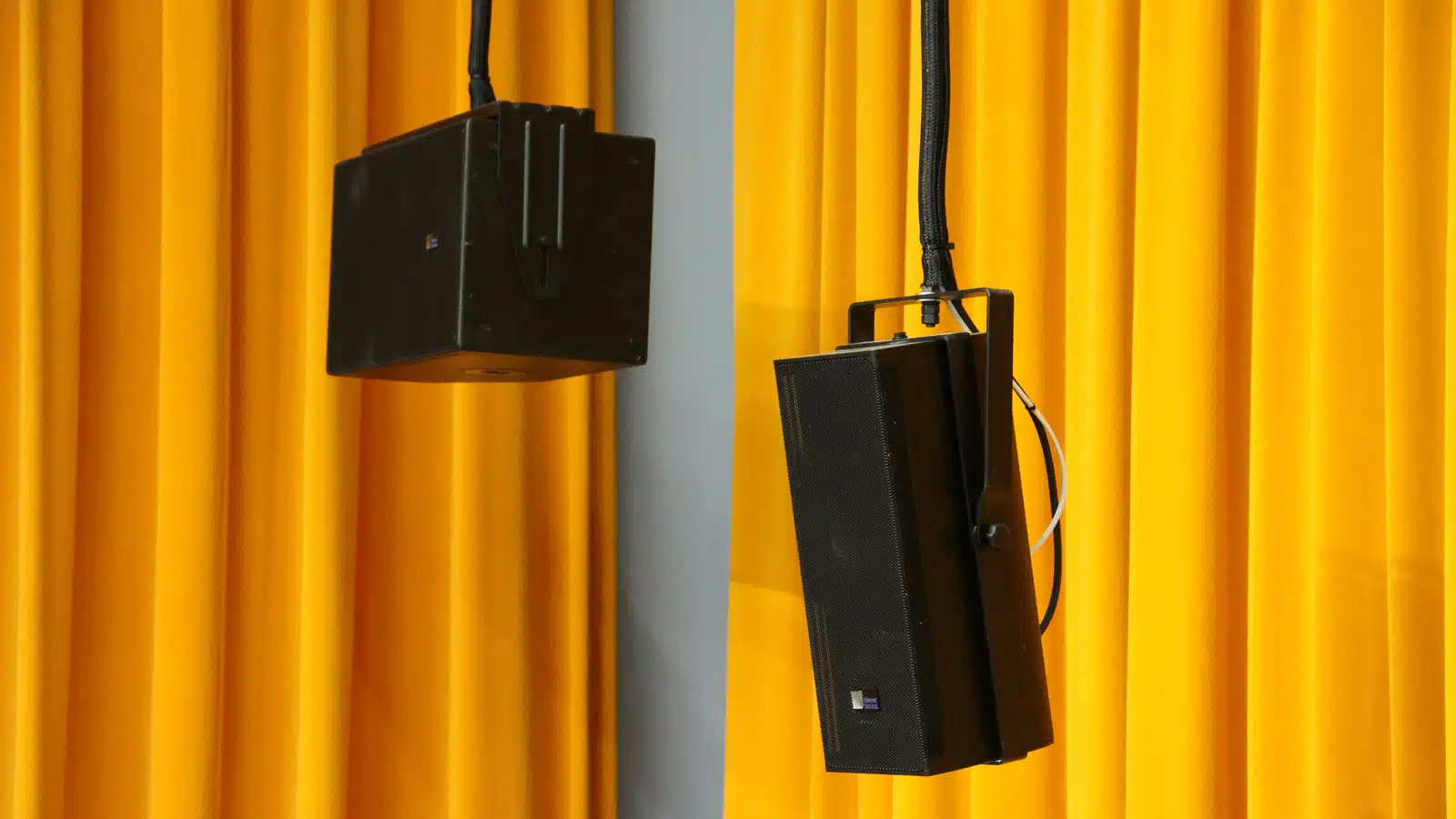
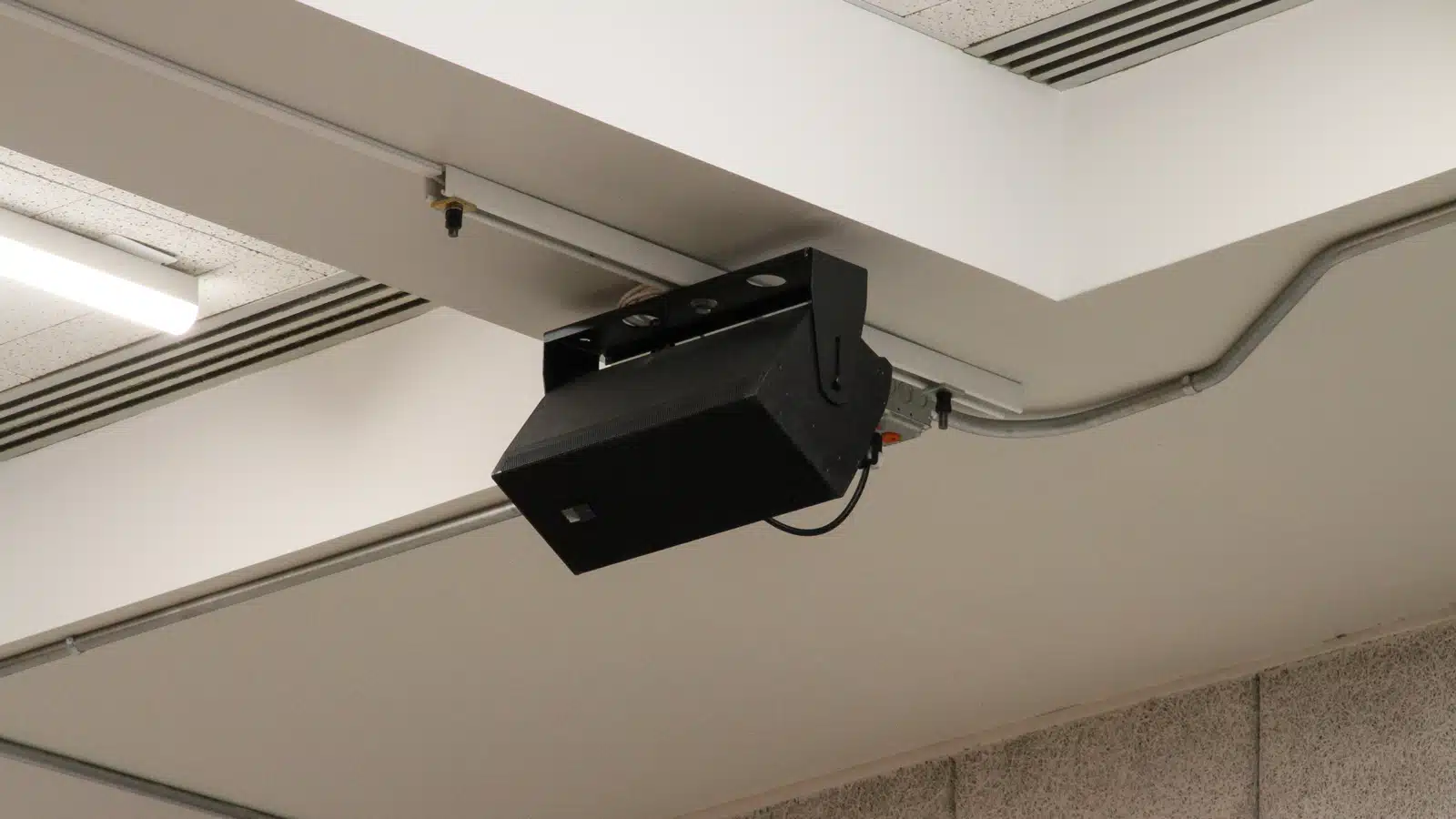
The 19.6.4 system comprises 13 ULTRA‑X20 and six ULTRA‑X22 compact point source loudspeakers, with 13 loudspeakers positioned laterally and six overhead, and four USW‑112P compact subwoofers, all connected via a Milan AVB network and processed by a NADIA integrated digital audio platform. Eight legacy UPA-1P loudspeakers from an earlier Meyer Sound installation can also be deployed on the floor level for expanded spatial configurations.
“It’s an incredibly flexible environment,” Jacobs says. “More than a dozen base-level Spacemaps were created—some that use all the surfaces, others that isolate the overhead or lateral layers—so students can start creating right away. They can plug in a laptop, open Spacemap Go, and move sound through the room without writing a line of code or setting up complex routing. That immediacy makes experimentation possible at any level.”
The department’s first performance in the new space combined original works by graduate composers with a spatial presentation of Karlheinz Stockhausen’s Gesang der Jünglinge. Huebner has also been exploring other multichannel works as reference materials for his students. “It’s been thrilling to revisit those pieces,” he says. “Hearing them in a fully immersive context gives students a chance to experience how these early electronic works were conceived—and how far the technology has come.”
For integrator Mike Shoulson of DBS Audio Systems, the project was both a technical challenge and a creative reward. “We had to determine mounting points and raceways directly on site,” he says. “It’s different from reinforcement work because you’re dealing with dozens of speakers that all interact, and precision really matters. When we powered up the system, the spatial imaging was stunning — motion was rendered with remarkable clarity. It’s exciting to see this level of technology used for education, where students can learn on the same tools they’ll find in major venues.”
UB’s Department of Music is integrating the space into coursework across composition, recording, and performance. “The students are getting more adventurous every week,” says Jacobs. “At first they were moving a single sound source around the room; now they’re building multi-layer trajectories and experimenting with how height and motion change perception. It’s rewarding to watch them grow into it.”
Beyond music, the department plans to extend access to UB’s Media Study program and other disciplines, eventually adding immersive video projection and flexible seating for collaborative intermedia projects. “It’s a powerful new space to experience sound and video art collectively,” says Huebner. “That combination of experimentation and real-world application is what makes it so exciting.”